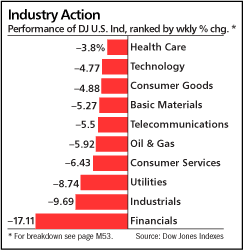
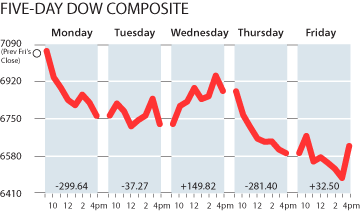
1) If you wait for the robin, Spring is gone. (Start investing now, stocks are cheap)
2) The second mouse gets the cheese. (The market is still in turmoil, keep your powder dry, and wait until the smoke has cleared)
Showing posts with label strategies. Show all posts
Showing posts with label strategies. Show all posts
Monday, October 20, 2008


Thursday, June 12, 2008
This Bud's For You?
Politics may block InBev's Anheuser-Busch bid
Belgian Brewer InBev is offering a big payday to shareholders of Anheuser-Busch Cos. Inc., but its bid to create the world's largest beer company is already facing a major obstacle _ U.S. election-year politics.
InBev SA, whose brands include Beck's and Stella Artois, delivered an unsolicited all-cash bid of $65 a share for Anheuser-Busch, which makes Budweiser, Michelob and Bud Light. That's well above the St. Louis-based company's closing share price of $58.35 Wednesday.
But politicians and activists are already lining up against the deal, saying it could cost jobs in the United States and send ownership of an iconic American company overseas. With economic concerns at the front of voters' minds, the opposition could cause a headache for InBev.
Republican Gov. Matt Blunt said Wednesday he opposes the deal, and directed the Missouri Department of Economic Development to see if there was a way to stop it.
"I am strongly opposed to the sale of Anheuser-Busch, and today's offer to purchase the company is deeply troubling to me," Blunt said in a statement.
Web sites have sprung up opposing the deal on patriotic grounds, arguing that such an iconic U.S. firm shouldn't be handed over to foreign ownership. One of the sites, called SaveAB.com, was launched by Blunt's former chief of staff, Ed Martin.
"Shareholders should resist choosing dollars over American jobs," Martin said in a statement Wednesday night. "Selling out to the Belgians is not worth it _ because this is about more than beer: it's about our jobs and our nation."
If the deal goes through, it would create a beer-brewing giant and mark just the latest phase of consolidation in an industry facing rising ingredient costs and stale demand in the United States.
"Anheuser-Busch said that its board of directors will evaluate the proposal carefully and in the context of all relevant factors, including Anheuser-Busch's long-term strategic plan," the company said in a statement. "The board will pursue the course of action that is in the best interests of Anheuser-Busch's stockholders."
A spokeswoman said the company would not comment beyond the statement.
InBev Chief Executive Carlos Brito said the deal would boost both companies, giving InBev access to the U.S. market while expanding Anheuser-Busch's reach overseas.
"We have the highest respect for Anheuser-Busch, its employees and its leadership, who have built the leading brewer in the U.S. and grown the iconic Budweiser brand. Together, we would draw on the collective expertise of both companies' management and employees."
Shares of Anheuser-Busch soared 7.6 percent to $62.80 after regular trading hours, when the announcement was made. They had risen 2 percent in late-afternoon trading, when rumors of the deal were reported on CNBC. Speculation has been rife in recent weeks that the deal might occur.
InBev was formed in 2004 when Belgium's Interbrew merged with South America's biggest brewer AmBev. Since then, the company has cut jobs in several European countries while its sales were boosted by strong demand in Latin American countries.
Worries about job cuts at Anheuser-Busch could be justified. InBev has a reputation for squeezing costs out of the companies it acquires, said Benj Steinman, editor of the Beer Marketer's Insights trade publication. Because of its size _ and control of nearly half the U.S. beer market _ Anheuser-Busch could be a ripe target for cost-cutting.
"One theory is that their own cost reductions are winding down in Europe and Asia and around the world, and they need somewhere to sort of implement what they're best at," Steinman said.
InBev tried to allay those fears Wednesday, saying it would not close any Anheuser-Busch breweries and would make St. Louis the headquarters for its North American division. The company also said it would invite some Anheuser-Busch directors to join InBev's board.
Anheuser-Busch executives have made cost-cutting a goal over the last two years. Sales in the United States have been stagnant as consumers turn toward wine and cocktails, and the rising costs of ingredients have bitten into profit margins.
Last year, Anheuser-Busch turned a profit of $2.12 billion, up nearly 8 percent from $1.97 billion in 2006. But its core brands of Budweiser and Bud Light continued to lag as sales of craft beers and imports rose.
While the InBev deal looks sweet on paper, it's far from a sure thing. InBev said it plans to pay for the deal with $40 billion in debt, and raising so much capital could be tough as banks tighten their standards during a global credit crunch.
InBev's statement said the company has "strong support" from a number of financial institutions, including Barclays Capital, Deutsche Bank and JPMorgan. The company would pay for part of the deal by divesting some "noncore assets" along with equity financing.
Opposition to the deal is sure to be stiff in St. Louis. SaveAB.com offers visitors yard signs and bumper stickers to express their distaste for the purchase.
"Like baseball, apple pie and ice cold beer (wrapped in a red, white and blue label), Anheuser-Busch is an American original," the site says.
This Is A Corny Opportunity
By ANDREW BARY MORE ARTICLES BY AUTHOR
Everyone's dumping on ethanol, but the biofuel has a bright future. Three stocks that could get a healthy burst of energy in the coming year.
NEXT TO CIGARETTES, FEW products are more vilified than ethanol. The corn-based alcohol used as a substitute for gasoline has been blamed for driving up food costs, leading to malnutrition and riots in the developing world. A top official of the United Nations has blasted ethanol as a "crime against a great part of humanity."
Even Wall Street, which loved ethanol stocks in 2006 and '07, has turned against the business, because of growing supply and concerns about the future of the controversial fuel. Ethanol producer VeraSun Energy (ticker: VSE), at 6, is down 61% this year, and off 80% from its 2006 high of 30. Aventine Renewable Energy (AVR), at 5.25, is down 59% on the year, and far below its '06 peak of 43, while Pacific Ethanol (PEIX), at 3.24, has fallen 60% year to date, and 90% from its '06 high. Yet, even after this shellacking, most analysts covering the industry currently rate the stocks Neutral or Sell.
Ethanol stocks recently got a momentary lift from their lowly levels after all three companies reported first-quarter operating profits, and Congress passed a farm bill, over a presidential veto, that preserves most of the government's ethanol subsidies. What's more, the rally may resume, as the stocks are depressed, the businesses are profitable and the companies generally trade below the replacement cost of their ethanol plants.
Aventine is valued at about $1.40 per gallon of ethanol capacity, while VeraSun trades at the equivalent of about $1.50 per gallon. It costs about $2 per gallon to build a new ethanol facility, or $200 million for a plant that produces 100 million gallons a year.
If valued at replacement cost, Aventine's stock would trade at 12, or more than twice recent levels; VeraSun would trade at 11, nearly twice its recent price. Pacific Ethanol, which recently raised $28 million in a dilutive equity offering, trades slightly below replacement cost -- because it operates in the more protected West Coast market.
The Aventine and VeraSun estimates are based on projected 2009 capacity, after the completion of plants under construction. Future capacity is divided by each company's enterprise value, or equity-market value plus net debt. VeraSun is the biggest of the three, with projected production of 1.6 billion gallons, compared with 433 million for Aventine and 220 million for Pacific Ethanol.
THE ETHANOL INDUSTRY BENEFITS from federal subsidies, tariffs and production mandates. Oil refiners get a credit of 51 cents per gallon of ethanol blended with gasoline. The typical blend is 90% gasoline/10% ethanol. Due to a federal dictate, more than half the gasoline sold in the U.S. now contains ethanol, which accounts for 7% of total gasoline consumption. There is also a 54-cents-a-gallon tax on imported ethanol. The government mandates that 9 billion gallons of ethanol be used this year, rising to 10.5 billion in 2009 and 15 billion by 2015.
Ethanol has strong support from farm-belt legislators, since demand has helped corn prices nearly triple in the past two years; it also cuts gasoline prices.
Ethanol has been widely criticized as a wasteful, inefficient way to fuel automobiles. The industry, many argue, wouldn't exist without federal subsidies.
The critics make valid points, but ethanol has strong bipartisan support on Capitol Hill, and that's unlikely to change. The farm bill preserves the 54-cent tariff and reduces the refiners' credit to 45 cents a gallon from 51 cents through 2010. The tariff helps keep low-cost Brazilian ethanol out of the U.S., but Brazil's potential exports total only 1 billion gallons, a small fraction of U.S. needs.
REFINERS ARE BLENDING ethanol with gasoline not because of government edicts but because it makes economic sense. Ethanol now costs $2.50 per gallon -- or about $2.00 a gallon to refiners after the federal subsidy. The wholesale price of gasoline is above $3.30 a gallon.
This means that refiners save about $1.30 per gallon by using ethanol rather than pure gasoline. The savings per gallon of a 90/10 blend of gas and ethanol relative to pure gasoline is about 13 cents (10% of the $1.30 differential between ethanol and gasoline). Much of that gets passed on to consumers.
Then there are the savings to motorists due to the fact that gasoline demand is reduced by nine billion gallons annually. It's estimated that ethanol may reduce gas prices by a total of 35 cents a gallon. It may not feel like anyone's getting a deal at the pump right now, but in fact, a typical American family using 1,000 gallons of gas annually may be saving $350 a year thanks to ethanol.
ETHANOL PRODUCERS ARE profitable despite high corn prices of $6 per bushel. A bushel of corn, weighing about 56 pounds, makes nearly three gallons of ethanol, plus corn by-products that are fed to animals. And ethanol has strong political support in the farm belt because it has contributed to a near-tripling of corn prices in the past two years.
Wall Street fears that ethanol profit margins, now 40 to 50 cents a gallon, will narrow in late 2008 and 2009 as annual industry capacity rises -- from 9 billion gallons now to 13 billion gallons in early '09. This could cause a glut of ethanol on the market. The good news is that little new supply is expected to come on after 2009 due to the depressed valuation of ethanol producers and tough conditions in the credit markets. Plans for new plants are being scuttled, although those under construction likely will be completed.
Ethanol may be controversial, but it has powerful friends in Washington and is helping millions of cash-strapped Americans save money on gasoline. This suggests that the ethanol industry is here to stay -- and that hated stocks like Aventine and VeraSun could reward brave investors in the coming year.
Tuesday, June 10, 2008
Genentech - A Buy?

Why Genentech Is the Biotech of Choice (from Businessweek)
For investors who want a strong presence in the complex biotech universe, behemoth Genentech (DNA) is the stock of choice. So say some pros who predict biotechs will be next in line to rally. "Genentech is due for a big bounce on its technicals and fundamentals," says Carl Birkelbach of Birkelbach Investment Securities. Soaring to nearly 90 in early 2007, the stock then slumped, hitting 67 on May 27, 2008.
But at the May 30 American Society of Clinical Oncology meeting in Chicago, Genentech presented favorable new data on its products. And the stock rose, to 72.47 by June 4. Genentech, Birkelbach figures, will shoot to 100 in 24 months. He is impressed with Genentech's pipeline, with 15 compounds set to come out in two years and 30 within five. Genentech plans to seek approval for a new application for its chief drug, Avastin, for an aggressive brain cancer known as GBM. Avastin is now approved for first-time treatment of metastatic colorectal and breast cancers.
May-Kin Ho of Goldman Sachs (GS), who rates Genentech (a client) a buy, says Avastin's potential in other types of cancer--including ovarian, prostate, and brain, with a combined sales potential of more than $1.2 billion--"is underappreciated." Ho sees earnings of $3.17 a share in 2008, $3.82 in 2009, and $4.57 in 2009, up from $2.70 in 2007.

Friday, May 30, 2008
Dell Turnaround 1st Qtr 2008 Earnings
Dell today reported record fiscal first quarter revenue of $16 billion, a 9 percent year-over-year increase, and earnings of $0.38 cents per share, a 12 percent increase. The results were driven by better-than-industry growth of commercial and consumer products and services, and lower operating expense as a percent of revenue.
Product shipments in the quarter increased 22 percent, with servers growing three times the industry rate at 21 percent. Storage revenue increased 15 percent and enhanced services revenue was up 13 percent. Notebook unit growth, a Dell strategic priority, rose sharply at 43 percent and 1.2 times the industry growth rate. Consumer units grew at more than two times the industry rate and the company increased its global share by 1.2 points to 8.8 percent during the quarter.
“We are executing on all points of our strategy to drive growth in every product category and in every part of the world,” said Michael Dell, chairman and CEO. “These results are early signs of our progress against our five strategic priorities. Through a continued focus, we expect to continue growing faster than the industry and increase our revenue, profitability and cash flow for greater shareholder value.”
Dell’s headcount has been reduced by 7,000 in the past year – including a reduction of about 3,700 in the first quarter – or 8 percent before the impact of acquisitions. Dell has added about 2,700 employees through acquisitions, making the net reduction for the company about 5 percent.
Operating expenses were 12.9 percent of revenue for the quarter. Cash flow from operations was $143 million and impacted by lower payables and tax and bonus payments. The company still expects to generate cash flow from operations in excess of net income on an annualized basis. Dell ended the quarter with $9.8 billion in cash and investments and weighted average shares were 2.04 billion.
In the quarter, Dell issued $1.5 billion in private placement and medium- and long-term notes to be used for general corporate purposes. Dell spent more than $1 billion to repurchase 52 million shares of stock and plans to spend at least $1 billion on share repurchase in the second quarter.
Regional Highlights (This is the key for Dell's long term success (Tim))
Revenue from outside the United States during the quarter surpassed revenue from the U.S. for the first time. BRIC countries – Brazil, Russia, India and China – led accelerated growth in emerging countries with 73 percent year-over-year increase in shipments and 58 percent increase in revenue, and accounted for almost 9 percent of Dell’s total revenue.
Asia-Pacific and Japan Commercial (APJ): Revenue in the quarter grew by 19 percent on a 31 percent increase in units. Operating income was up 52 percent on a balanced country, segment and product performance. India and China led the region with revenue increases of 52 percent and 30 percent, and unit shipment growth of 68 percent and 43 percent, respectively. APJ growth continued strong across all product categories, with shipment increases of 46 percent in notebooks, 23 percent in server shipments and 25 percent in desktops.
Americas Commercial: Total unit growth was up 3 percent driven by an 11 percent increase in notebooks and a 20 percent increase in servers, which was more than four times the rate of the industry.
Europe, Middle East and Africa Commercial (EMEA): Revenue increased 15 percent and shipments were up 30 percent, with a 59 percent increase in shipments of notebooks. Storage revenue increased 48 percent. Unit growth in the region was led by the largest countries: United Kingdom up 20 percent; Germany up 26 percent and France up 14 percent.
Tuesday, May 20, 2008
A Personal Hedge Against The Rise In Gasoline
In April 2007 I bought into the Vanguard Energy Fund. I used money from a 401K account which had luke warm returns. Although it wasn't planned as a hedge against the increasing price of gasoline that's exactly what it's been. The 1 year return has been 18.2% even with a downturn in oil prices last year. However my return has been 17.5% for 2008 with an annualized rate of approximately 40%. This clearly has outpaced my cost of gasoline.
In addition our investment club (ICK) has holdings in Exxon.
Consider investing in oil/energy as a hedge against rising prices.
(Tim)
In addition our investment club (ICK) has holdings in Exxon.
Consider investing in oil/energy as a hedge against rising prices.
(Tim)
Tuesday, May 6, 2008
Seven Stocks For The Next Seven Years

Seven Stocks for Seven Years
Undervalued, these shares should deliver outstanding returns.
In Gene Marcial's new book, 7 Commandments of Stock Investing, the BusinessWeek "Inside Wall Street" columnist shares his unique perspective gained from over 30 years of stock-picking. Marcial offers a counterintuitive method of picking market winners and profiting from a long-term approach. Have a look at 7 stocks he says are worth buying and holding for the next 7 years.
Apple
(AAPL) Superior and sophisticated products are pushing the company ahead of rivals. Although the stock has been on the rise since May, climbing to 177 a share from $99 a share a year ago, the stock is still below its high of 199, reached on Dec. 28, 2007.
(AAPL) Superior and sophisticated products are pushing the company ahead of rivals. Although the stock has been on the rise since May, climbing to 177 a share from $99 a share a year ago, the stock is still below its high of 199, reached on Dec. 28, 2007.
Boeing
(BA) The formidable aerospace company isn't saddled with major financial problems. True it has bumped into some air pockets, which pulled down its stock to 72 a share on Mar. 12, 2008. But it has since powered higher, to 85, and going. It's likely it will surpass its 52-week high of 107 before yearend.
(BA) The formidable aerospace company isn't saddled with major financial problems. True it has bumped into some air pockets, which pulled down its stock to 72 a share on Mar. 12, 2008. But it has since powered higher, to 85, and going. It's likely it will surpass its 52-week high of 107 before yearend.
Cvs Caremark
(CVS) Despite a steady ascent, the stock of the largest U.S. pharmaceutical retail chain still trades at a modest valuation. It is trading at just 14 times its estimated 2009 earnings, below its 10-year P-E average of 22.4, and also below that of its peers.
(CVS) Despite a steady ascent, the stock of the largest U.S. pharmaceutical retail chain still trades at a modest valuation. It is trading at just 14 times its estimated 2009 earnings, below its 10-year P-E average of 22.4, and also below that of its peers.
Genentech
(DNA) At about 68 a share, the stock of the biotech behemoth is a bargain, trading close to its low of 66, hit on Jan. 7, 2008. It traded as high as 89 in mid-January of 2007.
(DNA) At about 68 a share, the stock of the biotech behemoth is a bargain, trading close to its low of 66, hit on Jan. 7, 2008. It traded as high as 89 in mid-January of 2007.
JP Morgan Chase
(JPM) This company has the financial muscle, energy, and will to achieve its lofty growth goals. Its stock could triple over the long term, if the growth trajectory of Jamie Dimon's management team is sustained. Wall Street continues to underestimate JP Morgan's earnings power.
(JPM) This company has the financial muscle, energy, and will to achieve its lofty growth goals. Its stock could triple over the long term, if the growth trajectory of Jamie Dimon's management team is sustained. Wall Street continues to underestimate JP Morgan's earnings power.
Petroleo Brasileiro
(PBR) Petrobras, one of the world's largest oil companies, continues to bulk up its reserves and other assets. Some of the major stakeholders in this Brazilian company are large U.S. institutional investors.
(PBR) Petrobras, one of the world's largest oil companies, continues to bulk up its reserves and other assets. Some of the major stakeholders in this Brazilian company are large U.S. institutional investors.
PFIZER
(PFE) Its robust pipeline of new drugs will rekindle the company's growth. Pfizer is also expected to do some acquisitions of biotechs that already have late-stage products in development. Its stock is one that's in the bargain bin, trading close to its low of 19.79. Any positive news, such as a significant acquisition or an activist investor taking a major stake in the stock could spark instant interest in this stock considered by many to be a ho-hum stock.
(PFE) Its robust pipeline of new drugs will rekindle the company's growth. Pfizer is also expected to do some acquisitions of biotechs that already have late-stage products in development. Its stock is one that's in the bargain bin, trading close to its low of 19.79. Any positive news, such as a significant acquisition or an activist investor taking a major stake in the stock could spark instant interest in this stock considered by many to be a ho-hum stock.
Starting tomorrow I will highlight each firm. (Tim)
Wednesday, April 16, 2008
Roth IRAs For For Seasoned Citizens
I recently continued to invest in Roth IRAs. Since I'm 59 years young I was able to invest $5,000.00 for tax year 2007 and $6,000.00 for tax year 2008. Money was invested in Morningstar 5* rated funds.
Contributions are made in after-tax dollars. No deductions allowed.
Withdrawals of contributions and earnings are income tax free if the account is held for 5 years and withdrawn due to:
attaining age 59 1/2
first time home purchase ($10,000 life time limit)
disability
death
Contributions may be withdrawn at anytime free of tax and penalty. Contribution limits for tax years 2009 and beyond will be adjusted according to inflation.
Tim
Roth IRA Strategies
Why You Need a Roth IRA
With this indispensable savings tool, your money grows tax-free, you can invest in almost anything and you get several cool perks.
By Erin Burt
March 9, 2006
This article was updated in 2008.
One of the smartest money moves a young person can make is to invest in a Roth IRA. Follow the rules and any money you put into one of these retirement-savings accounts grows absolutely tax free -- you won't owe Uncle Sam a dime as you let your savings accumulate, or when you cash it out in retirement. Plus, an IRA is more flexible than a 401(k) and other retirement plans because you can invest it in almost whatever you want, from stocks and mutual funds to bonds and real estate.
If you haven't yet opened this gift from Uncle Sam, do it now. You have until your tax return deadline to set up and make contributions for the previous tax year. The government sets a limit on how much you can contribute to a Roth. That limit was $4,000 in 2007, and it rose to $5,000 in 2008. That means if you act before April 15, you can invest $4,000 right now to count for last year, giving you a solid start to your savings. And you have until next year's tax deadline to kick in your $5,000 for 2008.
The idea of saving on your taxes may seem a tad obscure, but it really can pay off big. If a 25-year-old contributes $5,000 each year until she retires and makes an average annual return of 8% on her investment, she'll have $1.4 million saved by the time she retires at age 65. And the money is all hers -- she won't have to give the IRS a cent of it if she waits until retirement to cash out. (Use this calculator to see how far your savings can take you. Enter "0" in the tax rate boxes to simulate the tax-exempt status of a Roth IRA.)
If that same 25-year-old invested that same $5,000 a year in a regular taxable account earning the same 8% return, she'd only have about $1 million after 40 years if her earnings were taxed at 15% federal. That's more than one-fourth less money than if she'd gone with the Roth. If she owed state taxes on the money too, she'd be down even more.
Roth rules
As with any government gift, the Roth IRA comes with a few strings attached. First, you can contribute to a Roth only if you have earned income from a job. Say you're in school, you're not working and you have a little extra money left over from your student loan or your parents gave you money. You cannot put it in a Roth. Also, you cannot save more than you made. So if you worked a summer job and made only $3,000, the most you can contribute to a Roth is $3,000.
It's also possible to make too much. You can contribute the full $5,000 in 2008 as long as your income falls below $101,000 if you're single, and $159,000 if you're married filing a joint tax return. The contribution limit is then phased out incrementally if you make between $101,000 and $116,000 (single) or $159,000 and $169,000 (married-joint). Make more than those upper limits, and you don't have to cash out the account -- you simply cannot contribute any more money to a Roth IRA.
If you expect to exceed the Roth income limits at some point during your career, you should open a Roth now while you're young and your salary is low enough to get in. If a 25-year-old saved $5,000 a year for only five years, then didn't contribute another dime for the next 35 years because his income was too high, that money would continue to grow -- to nearly $481,000 by the time he turned 65. That alone certainly won't be enough to retire on, but it'll be a nice tax-free bonus to his other retirement savings.
Bonus!
If the savings power, flexibility and tax-free status aren't enough to convince you of the Roth's virtues, Uncle Sam throws in a few extra perks, making the Roth an indispensable tool in a young adult's financial life.
- You can take money out in a pinch. Although the purpose of a Roth is to save for retirement, and your money can grow only if you leave it in the account, you can withdraw your contributions at any time, tax free and without penalty -- and you don't have to pay it back, like you do with a 401(k). Of course, it's best to leave your money in the account so you can earn more money, and you really should have a separate emergency savings account on standby, but it's nice to know the Roth is there for you if you need it. Notice we said you can take out your contributions at any time -- not your earnings. If you withdraw any of your earnings before age 59½, you'll trigger a tax bill on the money, plus you'll have to pay a 10% penalty. Ouch.
- You can tap your Roth to buy your first home. The IRS lets you cash out up to $10,000 from your Roth IRA tax- and penalty-free -- which can include earnings -- to help you achieve the American dream. However, the account must have been opened for five years. You could use tax-free money from your IRA to buy a house starting in January 2011. That $10,000 limit is per person, so couples could withdraw up to $20,000.
If you don't meet the five-year test, you still can take out the money for your home purchase, but you'll have to pay taxes on it. You won't have to pay the 10% early-withdrawal penalty, though. - You can use it to save for Junior's education. Many new parents don't know whether to save for retirement or the baby's college tuition. Hands down, retirement wins. There are loans to pay for college, but none to help fund your retirement. But starting a Roth is a great way to cover both bases, just in case. Focus on your retirement now, saving as much into a Roth as you can. And as your finances allow, consider opening a specific college-savings account for the new baby -- say, a Coverdell or 529 plan. Then, when the day comes for Junior to head off to school, you can assess whether you can afford to -- or need to -- sacrifice some of your retirement dollars to make it happen.
You can, of course, take out your contributions at any time to help pay the bill. If you dip into earnings, you'll owe taxes -- but you don't have to pay the 10% early-withdrawal penalty if you use the money for college. The Roth shouldn't be used as the sole savings vehicle for higher education, but it's nice to know you can use it if you need it.
Rebate Checks Spending

The following chart shows where consumers have been spending their hard earned dollars. If this pattern continues it might indicate where consumers will spend the tax rebate that will start hitting the mail boxes inn the next few months.
If consumers continue spending on flat screen TVs then Best Buy probably would benefit from this trend. Other beneficiaries of consumer spending could be Apple, and Research In Motion. Even though spending is down on clothing I would expect a increase this summer as rebate checks hit and a new school looms. (Tim)
Monday, April 7, 2008
Correlation and Asset Allocation
The credit for this is due to a fellow name Harry Markowitz, who figured out that if you combine two assets with the same return that aren’t perfectly correlated, this diversification can result in reduced risk without reducing return. Even if you don’t combine two assets with the same return, combining two assets that have low correlations (don’t move together) will get you a better reward/risk ratio. Markowitz later won a Nobel Prize for his work in this area.
Stocks vs. Bonds Studies have shown that somewhere between 77% and 94% of the variability in portfolio returns are determined by asset allocation. So our goal is to use asset classes with low correlation to get the best reward/risk ratio. One of the most popular examples of assets that have low correlation is stocks and bonds. Accordingly, adjusting your ratio between stocks and bonds is one of the most basic ways to adjust the amount of risk you wish to take in a portfolio.
The chart below shows the risk/return trade-off between bonds and stocks for 1980-2004. The stock portfolio is represented by the S&P 500 index, while the bond portfolio contains 60% five-year Treasury notes and 40% long-term Treasury bonds. The portfolios range from 100% bonds, to 95% bonds/5% stocks, 90% bonds/10% stocks, all the way to 100% stocks.

It’s interesting to note that being 40% stocks/60% bonds actually ends up with the same level of risk, but almost 2% more in average annual return. I think this is a big part of why you won’t see many model portfolios with more than 60% bonds. Also, I would note that as you get near 100% stocks, the slope of the curve gets flatter and you start taking on more risk without getting as much higher return.
Stay Tuned
Friday, April 4, 2008
Investing, Correlation and Diversity
We're all advised by the experts to diversify our financial portfolio. One way to do this is through balanced mutual funds or picking mutual funds that invest in different sectors or have different objectives. But if you want to diversify by adding other financial assets to your stock holdings then take a look at the correlation between stocks and how you plan to diversify.
In the world of finance, correlation is a statistical measure of how two securities move in relation to each other. Correlations are used in advanced portfolio management.
Notes: Correlation is computed into what is known as the correlation coefficient, which ranges between -1 and +1. Perfect positive correlation (a correlation co-efficient of +1) implies that as one security moves, either up or down, the other security will move in lockstep, in the same direction. Alternatively, perfect negative correlation means that if one security moves in either direction the security that is perfectly negatively correlated will move by an equal amount in the opposite direction. If the correlation is 0, the movements of the securities is said to have no correlation, it is completely random. If one security moves up or down there is as good a chance that the other will move either up or down, the way in which they move is totally random.In real life however you likely will not find perfectly correlated securities, rather you will find securities with some degree of correlation. For example, the performance of two stocks within the same industry is strongly positively correlated although it may not be exactly +1.
So if you want to diversify or complement your stock holdings then look for assets that have a negative correlation, with a perfect negative correlation being -1. More tomorrow.
Subscribe to:
Posts (Atom)