From Barrons
Last week, Hewlett-Packard (ticker: HPQ) missed its own quarterly profit projections for the first time since Chief Executive Mark Hurd took the reins in 2005. The company reported earnings of 75 cents a share, significantly below its forecast range of 80 cents to 82 cents.
The company did manage to meet the Street's expectations for earnings minus one-time charges -- 93 cents a share. But the market isn't seeing anything half-full these days.
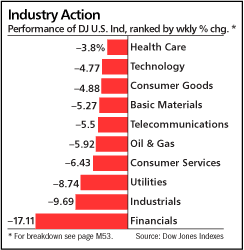
It was a painful quarter, plain and simple, thanks to an abysmal economy that continues to worsen. Shares were trading Friday afternoon at $31.20, down 13% for the week. HP's stumble helped take much of the tech sector down with it (see Tech Trader). And news on Apple (AAPL) added fuel to the fire -- with outside reports of its first monthly decline in three years for computer unit sales at U.S. retail outlets.
HP's miss was significant because there was hope that Hurd might keep his meet-and-raise earnings streak alive, even as customers sit on their wallets.
In a feature story late last year ("Picture of Health," Dec. 29), I called HP a solid defensive play because of the company's recurring revenue streams, generated by printer ink, as well as outsourcing contracts gained through the acquisition of Electronic Data Systems. Although the stock has dropped from about $35 then, I still believe my argument will be borne out over time. The bet is based on Hurd's operations acumen and proven ability to deliver strong profit margins in the face of adversity, which admittedly got dinged a little last week.
In addition to missing its target for the quarter, HP projected earnings for fiscal 2009 in the range of $3.76 to $3.88, well below expectations as high as $4.03 set by the company back in the fall, says Bernstein Research hardware analyst Toni Sacconaghi. Revenues loom as an obvious concern: For the first quarter, they missed analyst forecasts handily, with sales suffering in nearly all business areas -- from personal computers to enterprise servers and even to ink, perhaps the biggest surprise of all.
But the investment thesis is still intact. Hurd's message, even back in December, was revenues be damned. He urged investors to focus on things he can control, such as grabbing market share and increasing profit margins through tighter cost controls of items including his own paycheck. The company plans to slash Hurd's base pay of $1.45 million by 20%, while reducing other executive-level salaries by as much as 15%. Paychecks for other employees could be cut by up to 5%.
Hurd, in a conference call, pointed out that HP gained market share in many key businesses. Another bright spot was services, which now earns recurring profits of $1 billion a quarter. "In many ways, I will tell you [that the first quarter] from an execution perspective was among the strongest we have delivered," he said.
Sacconaghi, for one, is advising his clients to buy HP on this dip. He argues convincingly that the shares are attractively valued, trading at nearly a 30% discount to the S&P 500, based on his firm's fiscal 2009 estimates. His target is 47.
Showing posts with label HP. Show all posts
Showing posts with label HP. Show all posts
Monday, February 23, 2009


Friday, February 20, 2009
HP 1st Quarter Earnings
HP Reports First Quarter 2009 Results
>First quarter net revenue up 1%, or 4% in local currency, from a year earlier to $28.8 billion; >First quarter GAAP operating profit down 5% to $2.5 billion;
>$0.75 GAAP earnings per share, down from $0.80 a year earlier;
>First quarter non-GAAP operating profit up 10% to $3.1 billion;
>$0.93 non-GAAP earnings per share, up from $0.86 a year earlier;
>Services posts record operating profit of $1.1 billion; EDS integration ahead of plan
PALO ALTO, Calif.--(BUSINESS WIRE)--Feb. 18, 2009-- HP (NYSE:HPQ) today announced financial results for its first fiscal quarter ended Jan. 31, 2009, with net revenue of $28.8 billion, up 1% from a year earlier and up 4% when adjusted for the effects of currency.
In the first quarter, GAAP operating profit was $2.5 billion and GAAP diluted earnings per share (EPS) was $0.75, down from $0.80 in the prior-year period. Non-GAAP operating profit was $3.1 billion, with non-GAAP diluted EPS of $0.93, up from $0.86 in the prior-year period. Non-GAAP financial information excludes $431 million of adjustments on an after-tax basis, or $0.18 per diluted share, related primarily to amortization of purchased intangible assets, restructuring charges and acquisition-related charges. GAAP and Non-GAAP diluted EPS include $0.03 of charges related to currency hedging losses.
Personal Systems Group
Personal Systems Group (PSG) revenue declined 19% to $8.8 billion, with unit shipments down 4%. Notebook revenue for the quarter was down 13%, while Desktop revenue declined 25%. Commercial client revenue was down 19%, while Consumer client revenue decreased 18%. Operating profit was $435 million, or 5.0% of revenue, down from $628 million, or 5.8% of revenue, in the prior-year period.
Imaging and Printing Group
Imaging and Printing Group (IPG) revenue declined 19% to $6.0 billion. Supplies revenue was down 7%, while Commercial hardware revenue and Consumer hardware revenue declined 34% and 37%, respectively. Printer unit shipments decreased 33%, with Consumer printer hardware units down 31% and Commercial printer hardware units down 39%. Operating profit was $1.1 billion, or 18.5% of revenue, versus $1.1 billion, or 15.5% of revenue, in the prior-year period.
Enterprise Storage and Servers
Enterprise Storage and Servers (ESS) reported total revenue of $3.9 billion, down 18%. Storage revenue declined 7% with the midrange EVA product line down 7%. Industry Standard Server revenue and Business Critical Systems revenue declined 22% and 17%, respectively, while ESS blade revenue grew 4%. Operating profit was $405 million, or 10.3% of revenue, down from $673 million, or 14.0% of revenue, in the prior-year period.
Services
Services revenue increased 116% to $8.7 billion due primarily to the EDS acquisition. Revenue in Technology Services was flat. ITO, Application Services and BPO posted revenue of $3.9 billion, $1.6 billion and $743 million, respectively. Operating profit was $1.1 billion, or 12.8% of revenue, up from $499 million, or 12.3% of revenue, in the prior-year period.
HP Software
HP Software revenue declined 7% to $878 million. Business Technology Optimization portfolio revenue declined 4% while Other Software revenue was down 14%. Operating profit was $140 million, or 15.9% of revenue, up from $49 million, or 5.2% of revenue, in the prior-year period.
HP Financial Services
HP Financial Services (HPFS) reported revenue of $636 million, down 1% from the prior-year period. Financing volume increased 2%, and net portfolio assets declined 3%. Operating margin was 6.4% of revenue, down from 6.7% in the prior-year period.
Asset management
HP generated $1.1 billion in cash flow from operations for the first quarter. Inventory ended the quarter at $7.6 billion, down 2 days. Accounts receivable of $14.8 billion was up 7 days. Accounts payable ended the quarter at $11.2 billion, down 1 day. HP’s dividend payment of $0.08 per share in the first quarter resulted in cash usage of $193 million. HP utilized $1.2 billion of cash during the first quarter to repurchase approximately 34 million shares of common stock in the open market. HP exited the quarter with $11.3 billion in gross cash.
Outlook
HP estimates second quarter FY09 revenue will decline approximately two to three percent from the prior-year period.
Second quarter FY09 GAAP diluted EPS is expected to be approximately $0.70 to $0.72, and non-GAAP diluted EPS is expected to be approximately $0.84 to $0.86. Second quarter FY09 non-GAAP diluted EPS estimates exclude after-tax costs of approximately $0.14 per share, related primarily to the amortization of purchased intangibles and restructuring charges.
HP estimates full year FY09 revenue will decline approximately two to five percent from the prior-year period.
Full year FY09 GAAP diluted EPS is expected to be approximately $3.19 to $3.31, and non-GAAP diluted EPS is expected to be approximately $3.76 to $3.88. FY09 non-GAAP diluted EPS estimates exclude after-tax costs of approximately $0.57 per share, related primarily to the amortization of purchased intangibles and restructuring charges.
>First quarter net revenue up 1%, or 4% in local currency, from a year earlier to $28.8 billion; >First quarter GAAP operating profit down 5% to $2.5 billion;
>$0.75 GAAP earnings per share, down from $0.80 a year earlier;
>First quarter non-GAAP operating profit up 10% to $3.1 billion;
>$0.93 non-GAAP earnings per share, up from $0.86 a year earlier;
>Services posts record operating profit of $1.1 billion; EDS integration ahead of plan
PALO ALTO, Calif.--(BUSINESS WIRE)--Feb. 18, 2009-- HP (NYSE:HPQ) today announced financial results for its first fiscal quarter ended Jan. 31, 2009, with net revenue of $28.8 billion, up 1% from a year earlier and up 4% when adjusted for the effects of currency.
In the first quarter, GAAP operating profit was $2.5 billion and GAAP diluted earnings per share (EPS) was $0.75, down from $0.80 in the prior-year period. Non-GAAP operating profit was $3.1 billion, with non-GAAP diluted EPS of $0.93, up from $0.86 in the prior-year period. Non-GAAP financial information excludes $431 million of adjustments on an after-tax basis, or $0.18 per diluted share, related primarily to amortization of purchased intangible assets, restructuring charges and acquisition-related charges. GAAP and Non-GAAP diluted EPS include $0.03 of charges related to currency hedging losses.
Personal Systems Group
Personal Systems Group (PSG) revenue declined 19% to $8.8 billion, with unit shipments down 4%. Notebook revenue for the quarter was down 13%, while Desktop revenue declined 25%. Commercial client revenue was down 19%, while Consumer client revenue decreased 18%. Operating profit was $435 million, or 5.0% of revenue, down from $628 million, or 5.8% of revenue, in the prior-year period.
Imaging and Printing Group
Imaging and Printing Group (IPG) revenue declined 19% to $6.0 billion. Supplies revenue was down 7%, while Commercial hardware revenue and Consumer hardware revenue declined 34% and 37%, respectively. Printer unit shipments decreased 33%, with Consumer printer hardware units down 31% and Commercial printer hardware units down 39%. Operating profit was $1.1 billion, or 18.5% of revenue, versus $1.1 billion, or 15.5% of revenue, in the prior-year period.
Enterprise Storage and Servers
Enterprise Storage and Servers (ESS) reported total revenue of $3.9 billion, down 18%. Storage revenue declined 7% with the midrange EVA product line down 7%. Industry Standard Server revenue and Business Critical Systems revenue declined 22% and 17%, respectively, while ESS blade revenue grew 4%. Operating profit was $405 million, or 10.3% of revenue, down from $673 million, or 14.0% of revenue, in the prior-year period.
Services
Services revenue increased 116% to $8.7 billion due primarily to the EDS acquisition. Revenue in Technology Services was flat. ITO, Application Services and BPO posted revenue of $3.9 billion, $1.6 billion and $743 million, respectively. Operating profit was $1.1 billion, or 12.8% of revenue, up from $499 million, or 12.3% of revenue, in the prior-year period.
HP Software
HP Software revenue declined 7% to $878 million. Business Technology Optimization portfolio revenue declined 4% while Other Software revenue was down 14%. Operating profit was $140 million, or 15.9% of revenue, up from $49 million, or 5.2% of revenue, in the prior-year period.
HP Financial Services
HP Financial Services (HPFS) reported revenue of $636 million, down 1% from the prior-year period. Financing volume increased 2%, and net portfolio assets declined 3%. Operating margin was 6.4% of revenue, down from 6.7% in the prior-year period.
Asset management
HP generated $1.1 billion in cash flow from operations for the first quarter. Inventory ended the quarter at $7.6 billion, down 2 days. Accounts receivable of $14.8 billion was up 7 days. Accounts payable ended the quarter at $11.2 billion, down 1 day. HP’s dividend payment of $0.08 per share in the first quarter resulted in cash usage of $193 million. HP utilized $1.2 billion of cash during the first quarter to repurchase approximately 34 million shares of common stock in the open market. HP exited the quarter with $11.3 billion in gross cash.
Outlook
HP estimates second quarter FY09 revenue will decline approximately two to three percent from the prior-year period.
Second quarter FY09 GAAP diluted EPS is expected to be approximately $0.70 to $0.72, and non-GAAP diluted EPS is expected to be approximately $0.84 to $0.86. Second quarter FY09 non-GAAP diluted EPS estimates exclude after-tax costs of approximately $0.14 per share, related primarily to the amortization of purchased intangibles and restructuring charges.
HP estimates full year FY09 revenue will decline approximately two to five percent from the prior-year period.
Full year FY09 GAAP diluted EPS is expected to be approximately $3.19 to $3.31, and non-GAAP diluted EPS is expected to be approximately $3.76 to $3.88. FY09 non-GAAP diluted EPS estimates exclude after-tax costs of approximately $0.57 per share, related primarily to the amortization of purchased intangibles and restructuring charges.
Monday, February 9, 2009
HP Declares Dividend
HP Board Declares Regular Dividend
PALO ALTO, Calif.--(BUSINESS WIRE)-- The HP (NYSE: HPQ) board of directors has declared a regular cash dividend of 8 cents per share on the company’s common stock.
The dividend, the second in HP’s fiscal year 2009, is payable on April 1, 2009, to stockholders of record as of the close of business on March 11, 2009.
HP has approximately 2.4 billion shares of common stock outstanding.
PALO ALTO, Calif.--(BUSINESS WIRE)-- The HP (NYSE: HPQ) board of directors has declared a regular cash dividend of 8 cents per share on the company’s common stock.
The dividend, the second in HP’s fiscal year 2009, is payable on April 1, 2009, to stockholders of record as of the close of business on March 11, 2009.
HP has approximately 2.4 billion shares of common stock outstanding.
Tuesday, February 3, 2009
HP Helps Small Businesses With Zero Percent Financing
HP today announced zero percent financing promotions that make it simple and affordable for small businesses to continue investing in the technology that can help them increase efficiency and grow their businesses.
Offered through HP Financial Services, the company’s asset management services and leasing subsidiary, the two promotions provide customers the choice to either lease or own products.
The zero percent 12-month promotion plan allows small businesses to invest in new technology while managing cash flow. At the end of the 12-month term, the equipment can be purchased for one dollar. The zero percent 36-month lease offer provides a fair market value purchase option at the end of the lease term.(1)
Both financing plans allow customers in the United States to finance between $1,500 and $150,000 worth of products from HP’s broad portfolio. Canadian customers can finance from CDN$5,000 to CDN$150,000 worth of products. Available through April 30, 2009, in the United States and Canada, full details for both offers are available at www.hp.com/go/totalfinancing.
Offered through HP Financial Services, the company’s asset management services and leasing subsidiary, the two promotions provide customers the choice to either lease or own products.
The zero percent 12-month promotion plan allows small businesses to invest in new technology while managing cash flow. At the end of the 12-month term, the equipment can be purchased for one dollar. The zero percent 36-month lease offer provides a fair market value purchase option at the end of the lease term.(1)
Both financing plans allow customers in the United States to finance between $1,500 and $150,000 worth of products from HP’s broad portfolio. Canadian customers can finance from CDN$5,000 to CDN$150,000 worth of products. Available through April 30, 2009, in the United States and Canada, full details for both offers are available at www.hp.com/go/totalfinancing.
Monday, December 29, 2008
HP, A Safe Haven
HP has become a more profitable and financially stable company under CEO Mark Hurd, who sees modest earnings growth through the next year. Better yet, the current slowdown may provide opportunities for HP to gain market share.
HEWLETT-PACKARD CHIEF MARK HURD doesn't offer any greater insights about the length or depth of this recession than the next guy. "This is not a strong market," he says. "We don't have any way of predicting whether this is a rebound.... It's going to take a period of time to build the fundamentals backup in the economy."
Buying EDS opens up opportunities and makes HP a tougher foe of IBM.
Even if his observations don't stray far from the conventional wisdom, Hurd distinguishes himself in a more important way: the ability to manage a huge technology company through hard times.
While other tech titans like Intel have been reforecasting downward, spreading more doom and gloom, Hurd projects that HP (ticker: HPQ) will have modest earnings growth through next year. The Street's consensus estimate puts Hewlett-Packard's 2009 profit at $9.46 billion, or $3.84 per share, for fiscal 2009, ending Oct. 31. That would be up from $8.3 billion or $3.62 a share, in the 2008 fiscal year.
The cost-conscious Hurd recently told Barron's that he is focused even more on profitability in this tough environment than he has been at other points in the business cycle. "I'm a lot more comfortable on the bottom line than I am on the top line, and I think we'll do well, relative to whatever market shows up, and that's probably the best I can do," he said in a recent interview at HP's Palo Alto, Calif., headquarters.
About a week before HP was slated to announce quarterly earnings last month, Hurd suspected that he had better news than his competitors, especially Dell (DELL), which was scheduled to announce its earnings four days before HP. With Hewlett shares at that time down 35% this year, to about 29, Hurd opted to preannounce a positive surprise to earnings, pushing his stock up about four points just afterward, even though future revenue (not including new sales from a major acquisition) looked "flattish." As it turned out, Dell's earnings met previously lowered estimates, though its revenue was disappointing to investors and its stock fell about 10%.
Hurd, who spent 25 years at National Cash Register, including a stint as CEO, sits atop one of the biggest information-technology companies in the world. It operates in three businesses: imaging and printing, which has long been a cash cow, accounting for about 25% of annual revenue; personal systems, which includes the personal-computer unit along with other consumer electronics and gadgets that generate roughly 36% of revenue; and technology solutions, which consists mostly of enterprise servers, storage, and business software and services, such as outsourcing, that also produce about 38% of revenue.
LESS THAN A DECADE AGO, HP was almost solely dependent on printer-ink supplies. Since Hurd's arrival in 2005, each of the business units has grown more profitable, giving the company financial balance and stability. Over the past four fiscal years, revenue has grown to $118.4 billion from $80 billion, while earnings per share have more than doubled.
HP Diversified Opportunities: Hewlett-Packard has a multitude of services and products aimed at both the consumer and corporate markets. About 60% of its revenue comes from abroad, another plus in tough times.
This emphasis on profits and diversity has helped HP earn a reputation as a top defensive tech play. In Hurd's nearly four-year reign, HP has met or exceeded every quarterly consensus target for earnings per share.
Recurring revenue of $40 billion a year helps HP qualify as a defensive play. This comes from items like ink supplies, outsourcing and corporate leasing, which account for about a third of total revenue. More important, those recurring sales will help to generate about half of the company's $9.46 billion-plus in estimated fiscal '09 earnings.
HP has the size and diversification -- in geography (about 60% of sales come from abroad), product lines and exposure to both consumer and enterprise markets -- that allow it to perform well during slow-to-no-growth economies, Barclays' Reitzes says. "That is part of the reason Mark has that confidence," Reitzes says.
On Nov. 18, HP surprised Wall Street with a preliminary announcement that its fourth-quarter earnings would beat analyst expectations. The company reported non-GAAP fiscal earnings of $1.03 a share, surpassing the Street's $1.00 estimate. Net revenue for the fiscal year was $118.4 billion, up 13% from the previous year.
"Those are real solid numbers," says money manager Chuck Jones of Atlantic Trust in San Francisco. Atlantic Trust has $15 billion under management, including a stake in HP.
Despite their reversal of fortune, on a forward earnings basis HP shares trade more cheaply than Dell's. HP trades for 8.18 times fiscal 2010 estimated earnings, versus Dell's 8.32 multiple for its Feb. 1, 2010, earnings. HP also seems a bargain compared to IBM (IBM), which trades at nine times expected 2009 earnings.
The multiple is particularly attractive, says Jones, when coupled with HP's strong cash generation, even during miserable economic times, driven by the reliable revenue streams.
HEWLETT-PACKARD HAS "limited downside and significant upside," Jones says. He thinks the shares could rally to the low-50s once signs of normalcy return to the stock market. As much as Hurd's acquisition of the Plano, Texas-based outsourcing outfit EDS helps fulfill his quest to build a "one-stop shop" for corporate digital-data needs like IBM's, there still is an important distinction between HP and Big Blue: the consumer market.
HP has the third-highest consumer revenue among computer-electronics outfits, following Apple (APPL) and printer-maker Lexmark (LXK), according to Bernstein Research hardware analyst Toni Sacconaghi. About 25% of HP's sales come from consumer products, compared with less than 1% at IBM, which exited printers and personal computers years ago to concentrate on corporate services.
Consequently, half-empty shopping malls have weighed heavily on HP shares, Sacconaghi says. But, considering that inkjet supplies account for about 98% of HP's consumer-driven profits, those fears are exaggerated. Ink sales should be "relatively immune to a slowdown," says Sacconaghi, who rates HP a Buy and expects the shares to reach 40.
Another interesting twist is that soft printer sales could actually mean higher overall margins, because printers lose money at retail. Sacconaghi foresees a drop in printer sales that would boost operating profits by $65 million, sufficient to compensate for a potential drop of nearly 2% in ink sales.
Long term, a decline in printers would hurt Hewlett-Packard. But Hurd says it's not a bad thing in the short term, especially as HP research shows people are keeping their printers longer. "We don't care if it's a new printer or an old printer doing the printing," he says.
Personal computers also are important contributors to HP's consumer-product line, kicking in about 10% of operating profits. After showing resilience in 2008, PC sales growth is expected to slow in 2009. The research firm IDC expects PC unit shipments industry wide to grow only 3.8% next year, compared with its earlier forecast of 13.7% growth. PC revenue is expected to fall about 5.3% in '09, compared with previous predictions of 4.5% growth, nearly a 10 percentage-point swing.
The biggest boost to profits and margins should come from EDS. This strategic addition is expected to allow HP to compete more aggressively with IBM for big corporate deals, and its integration couldn't be more timely. With operating margins in excess of 60% and long-term contracts stretching over three to five years, the EDS outsourcing business supplements recurring revenue while taking some of the pressure off inkjet-supply sales.
What's more, outsourcing is an enterprise-related, not a consumer business. Bernstein's Sacconaghi was concerned that some corporate clients would try to use change-in-control clauses in their contracts to bail on their outsourcing commitments, but Hurd says that hasn't been the case, except for a handful of customers who had disputes with EDS. "I can't think of any material customer exiting," Hurd says.
As CEO, Hurd consistently has met or beaten profit expectations.
Hurd has recruited the former CFO from his days running National Cash Register to help oversee the cost-cutting project. Pete Bocian, who had moved to Starbucks as CFO, was named chief administrative officer of HP in November, and will be based in Plano, near HP's EDS operations.
HP's other challenges include a weaker euro, which has a negative effect on revenue. Hurd urges investors to focus on profits. Margins, he says, would remain the same regardless of currency fluctuations. It is also possible the dollar will weaken again against the euro, in light of the Federal Reserve's dramatic interest-rate cuts.
Debt is also an issue. HP used commercial paper to finance its EDS acquisition, with the intention of extending its maturity later on. Given the capital markets' problems, that may now be tough to do. But Hurd counters that the company doesn't need to issue as much in bonds as initially thought, and the commercial-paper market remains open to issuers like HP, which recently completed a $2 billion bond offering.
Yet another potential problem is HP's large defined-benefit pension plan, which has been hard hit by the bear market in stocks. The company may have to kick in more money to maintain adequate funding. Bernstein's Sacconaghi says HP has built that risk into its planning, and any payments should be a "manageable" amount.
Given its strong financial position, the current slowdown could provide opportunities for HP to gain market share. "Now is the time to differentiate yourself with your customers," Hurd says. "It's not the easiest thing to do."
But it's something Hewlett-Packard -- and Hurd -- can do well.
HEWLETT-PACKARD CHIEF MARK HURD doesn't offer any greater insights about the length or depth of this recession than the next guy. "This is not a strong market," he says. "We don't have any way of predicting whether this is a rebound.... It's going to take a period of time to build the fundamentals backup in the economy."
Buying EDS opens up opportunities and makes HP a tougher foe of IBM.
Even if his observations don't stray far from the conventional wisdom, Hurd distinguishes himself in a more important way: the ability to manage a huge technology company through hard times.
While other tech titans like Intel have been reforecasting downward, spreading more doom and gloom, Hurd projects that HP (ticker: HPQ) will have modest earnings growth through next year. The Street's consensus estimate puts Hewlett-Packard's 2009 profit at $9.46 billion, or $3.84 per share, for fiscal 2009, ending Oct. 31. That would be up from $8.3 billion or $3.62 a share, in the 2008 fiscal year.
The cost-conscious Hurd recently told Barron's that he is focused even more on profitability in this tough environment than he has been at other points in the business cycle. "I'm a lot more comfortable on the bottom line than I am on the top line, and I think we'll do well, relative to whatever market shows up, and that's probably the best I can do," he said in a recent interview at HP's Palo Alto, Calif., headquarters.
About a week before HP was slated to announce quarterly earnings last month, Hurd suspected that he had better news than his competitors, especially Dell (DELL), which was scheduled to announce its earnings four days before HP. With Hewlett shares at that time down 35% this year, to about 29, Hurd opted to preannounce a positive surprise to earnings, pushing his stock up about four points just afterward, even though future revenue (not including new sales from a major acquisition) looked "flattish." As it turned out, Dell's earnings met previously lowered estimates, though its revenue was disappointing to investors and its stock fell about 10%.
Hurd, who spent 25 years at National Cash Register, including a stint as CEO, sits atop one of the biggest information-technology companies in the world. It operates in three businesses: imaging and printing, which has long been a cash cow, accounting for about 25% of annual revenue; personal systems, which includes the personal-computer unit along with other consumer electronics and gadgets that generate roughly 36% of revenue; and technology solutions, which consists mostly of enterprise servers, storage, and business software and services, such as outsourcing, that also produce about 38% of revenue.
LESS THAN A DECADE AGO, HP was almost solely dependent on printer-ink supplies. Since Hurd's arrival in 2005, each of the business units has grown more profitable, giving the company financial balance and stability. Over the past four fiscal years, revenue has grown to $118.4 billion from $80 billion, while earnings per share have more than doubled.
HP Diversified Opportunities: Hewlett-Packard has a multitude of services and products aimed at both the consumer and corporate markets. About 60% of its revenue comes from abroad, another plus in tough times.
This emphasis on profits and diversity has helped HP earn a reputation as a top defensive tech play. In Hurd's nearly four-year reign, HP has met or exceeded every quarterly consensus target for earnings per share.
Recurring revenue of $40 billion a year helps HP qualify as a defensive play. This comes from items like ink supplies, outsourcing and corporate leasing, which account for about a third of total revenue. More important, those recurring sales will help to generate about half of the company's $9.46 billion-plus in estimated fiscal '09 earnings.
HP has the size and diversification -- in geography (about 60% of sales come from abroad), product lines and exposure to both consumer and enterprise markets -- that allow it to perform well during slow-to-no-growth economies, Barclays' Reitzes says. "That is part of the reason Mark has that confidence," Reitzes says.
On Nov. 18, HP surprised Wall Street with a preliminary announcement that its fourth-quarter earnings would beat analyst expectations. The company reported non-GAAP fiscal earnings of $1.03 a share, surpassing the Street's $1.00 estimate. Net revenue for the fiscal year was $118.4 billion, up 13% from the previous year.
"Those are real solid numbers," says money manager Chuck Jones of Atlantic Trust in San Francisco. Atlantic Trust has $15 billion under management, including a stake in HP.
Despite their reversal of fortune, on a forward earnings basis HP shares trade more cheaply than Dell's. HP trades for 8.18 times fiscal 2010 estimated earnings, versus Dell's 8.32 multiple for its Feb. 1, 2010, earnings. HP also seems a bargain compared to IBM (IBM), which trades at nine times expected 2009 earnings.
The multiple is particularly attractive, says Jones, when coupled with HP's strong cash generation, even during miserable economic times, driven by the reliable revenue streams.
HEWLETT-PACKARD HAS "limited downside and significant upside," Jones says. He thinks the shares could rally to the low-50s once signs of normalcy return to the stock market. As much as Hurd's acquisition of the Plano, Texas-based outsourcing outfit EDS helps fulfill his quest to build a "one-stop shop" for corporate digital-data needs like IBM's, there still is an important distinction between HP and Big Blue: the consumer market.
HP has the third-highest consumer revenue among computer-electronics outfits, following Apple (APPL) and printer-maker Lexmark (LXK), according to Bernstein Research hardware analyst Toni Sacconaghi. About 25% of HP's sales come from consumer products, compared with less than 1% at IBM, which exited printers and personal computers years ago to concentrate on corporate services.
Consequently, half-empty shopping malls have weighed heavily on HP shares, Sacconaghi says. But, considering that inkjet supplies account for about 98% of HP's consumer-driven profits, those fears are exaggerated. Ink sales should be "relatively immune to a slowdown," says Sacconaghi, who rates HP a Buy and expects the shares to reach 40.
Another interesting twist is that soft printer sales could actually mean higher overall margins, because printers lose money at retail. Sacconaghi foresees a drop in printer sales that would boost operating profits by $65 million, sufficient to compensate for a potential drop of nearly 2% in ink sales.
Long term, a decline in printers would hurt Hewlett-Packard. But Hurd says it's not a bad thing in the short term, especially as HP research shows people are keeping their printers longer. "We don't care if it's a new printer or an old printer doing the printing," he says.
Personal computers also are important contributors to HP's consumer-product line, kicking in about 10% of operating profits. After showing resilience in 2008, PC sales growth is expected to slow in 2009. The research firm IDC expects PC unit shipments industry wide to grow only 3.8% next year, compared with its earlier forecast of 13.7% growth. PC revenue is expected to fall about 5.3% in '09, compared with previous predictions of 4.5% growth, nearly a 10 percentage-point swing.
The biggest boost to profits and margins should come from EDS. This strategic addition is expected to allow HP to compete more aggressively with IBM for big corporate deals, and its integration couldn't be more timely. With operating margins in excess of 60% and long-term contracts stretching over three to five years, the EDS outsourcing business supplements recurring revenue while taking some of the pressure off inkjet-supply sales.
What's more, outsourcing is an enterprise-related, not a consumer business. Bernstein's Sacconaghi was concerned that some corporate clients would try to use change-in-control clauses in their contracts to bail on their outsourcing commitments, but Hurd says that hasn't been the case, except for a handful of customers who had disputes with EDS. "I can't think of any material customer exiting," Hurd says.
As CEO, Hurd consistently has met or beaten profit expectations.
Hurd has recruited the former CFO from his days running National Cash Register to help oversee the cost-cutting project. Pete Bocian, who had moved to Starbucks as CFO, was named chief administrative officer of HP in November, and will be based in Plano, near HP's EDS operations.
HP's other challenges include a weaker euro, which has a negative effect on revenue. Hurd urges investors to focus on profits. Margins, he says, would remain the same regardless of currency fluctuations. It is also possible the dollar will weaken again against the euro, in light of the Federal Reserve's dramatic interest-rate cuts.
Debt is also an issue. HP used commercial paper to finance its EDS acquisition, with the intention of extending its maturity later on. Given the capital markets' problems, that may now be tough to do. But Hurd counters that the company doesn't need to issue as much in bonds as initially thought, and the commercial-paper market remains open to issuers like HP, which recently completed a $2 billion bond offering.
Yet another potential problem is HP's large defined-benefit pension plan, which has been hard hit by the bear market in stocks. The company may have to kick in more money to maintain adequate funding. Bernstein's Sacconaghi says HP has built that risk into its planning, and any payments should be a "manageable" amount.
Given its strong financial position, the current slowdown could provide opportunities for HP to gain market share. "Now is the time to differentiate yourself with your customers," Hurd says. "It's not the easiest thing to do."
But it's something Hewlett-Packard -- and Hurd -- can do well.
Wednesday, November 26, 2008
HP 4th Quarter 2008 Earnings

HP Reports Fourth Quarter 2008 Results
>Fourth quarter net revenue up 19%, or $5.3 billion, from a year earlier to $33.6 billion
>Fiscal 2008 net revenue up 13%, or $14.1 billion, to $118.4 billion
>Fourth quarter GAAP operating profit up 4% to $2.7 billion; $0.84 earnings per share, up from $0.81 a year earlier
>Fourth quarter non-GAAP operating profit up 21% to $3.4 billion; $1.03 earnings per share, up from $0.86 a year earlier
>Fourth quarter cash flow from operations of $3.3 billion; fiscal 2008 cash flow from operations of $14.6 billion, up 52% from a year earlier
>Closed EDS acquisition; integration on track
>Fourth quarter net revenue up 19%, or $5.3 billion, from a year earlier to $33.6 billion
>Fiscal 2008 net revenue up 13%, or $14.1 billion, to $118.4 billion
>Fourth quarter GAAP operating profit up 4% to $2.7 billion; $0.84 earnings per share, up from $0.81 a year earlier
>Fourth quarter non-GAAP operating profit up 21% to $3.4 billion; $1.03 earnings per share, up from $0.86 a year earlier
>Fourth quarter cash flow from operations of $3.3 billion; fiscal 2008 cash flow from operations of $14.6 billion, up 52% from a year earlier
>Closed EDS acquisition; integration on track
Revenue grew 17% in the Americas, 22% in Europe, the Middle East and Africa and 14% in Asia Pacific to $14.0 billion, $14.1 billion and $5.5 billion, respectively. When adjusted for the effects of currency, revenue grew 17% in the Americas, 15% in Europe, the Middle East and Africa and 12% in Asia Pacific. Revenue from outside of the United States in the fourth quarter accounted for 68% of total revenue, with revenue in the BRIC countries (Brazil, Russia, India and China) growing 23% over the prior-year period and accounting for 9% of total revenue.
Personal Systems Group
Personal Systems Group (PSG) revenue grew 10% to $11.2 billion, with unit shipments up 19%. Notebook revenue for the quarter grew 21%, while Desktop revenue declined 2%. Commercial client revenue grew 7%, while Consumer client revenue increased 15%. Operating profit was $616 million, or 5.5% of revenue, up from $589 million, or 5.8% of revenue, in the prior-year period.
Personal Systems Group (PSG) revenue grew 10% to $11.2 billion, with unit shipments up 19%. Notebook revenue for the quarter grew 21%, while Desktop revenue declined 2%. Commercial client revenue grew 7%, while Consumer client revenue increased 15%. Operating profit was $616 million, or 5.5% of revenue, up from $589 million, or 5.8% of revenue, in the prior-year period.
Imaging and Printing Group
Imaging and Printing Group (IPG) revenue declined 1% to $7.5 billion. Supplies revenue grew 9%, while Commercial hardware revenue and Consumer hardware revenue declined 10% and 21%, respectively. Printer unit shipments decreased 8%, with Consumer printer hardware units down 8% and Commercial printer hardware units down 9%. Operating profit was $1.2 billion, or 15.5% of revenue, versus $1.1 billion, or 14.5% of revenue, in the prior-year period.
Imaging and Printing Group (IPG) revenue declined 1% to $7.5 billion. Supplies revenue grew 9%, while Commercial hardware revenue and Consumer hardware revenue declined 10% and 21%, respectively. Printer unit shipments decreased 8%, with Consumer printer hardware units down 8% and Commercial printer hardware units down 9%. Operating profit was $1.2 billion, or 15.5% of revenue, versus $1.1 billion, or 14.5% of revenue, in the prior-year period.
Enterprise Storage and Servers
Enterprise Storage and Servers (ESS) reported total revenue of $5.1 billion, down 1%. Storage revenue grew 13% led by 16% revenue growth in the midrange EVA product line and 9% revenue growth in the high-end XP product line. Industry Standard Server revenue declined 3% and Business Critical Systems revenue declined 10% while ESS blade revenue increased 43%. Operating profit was $705 million, or 13.9% of revenue, down from $736 million, or 14.4% of revenue, in the prior-year period.
HP Services
HP Services (HPS) revenue increased 99% to $8.6 billion, led by $3.9 billion revenue resulting from the EDS acquisition for the period between the Aug. 26 acquisition date and Oct. 31. Excluding EDS, HPS revenue grew 10%. Revenue in Technology Services and Outsourcing Services grew 10% and 15%, respectively, with revenue in Consulting and Integration up 2%. Operating profit was $920 million, or 10.6% of revenue, compared to $515 million, or 11.8% of revenue, in the prior-year period.
HP Software
HP Software revenue grew 13% to $855 million, led by 15% growth in the Business Technology Optimization portfolio. Operating profit was $195 million, or 22.8% of revenue, up from $145 million, or 19.1% of revenue, in the prior-year period.
HP Financial Services
HP Financial Services (HPFS) reported revenue of $691 million, up 5%. Financing volume increased 5%, and net portfolio assets declined 2%. Operating margin was 7.4% of revenue, up from 7.3% in the prior-year period.
Tuesday, November 18, 2008
HP 4th Quarter 2008 Preliminary Earnings

HP Announces Preliminary Fourth Quarter Results; Provides 2009 Outlook
--Fourth quarter net revenue up 19%, or $5.3 billion, from a year earlier to $33.6 billion
--Fourth quarter GAAP earnings per share of $0.84, up 4% from $0.81 a year earlier
--Fourth quarter non-GAAP earnings per share of $1.03, up 20% from $0.86 a year earlier
--Fiscal 2008 net revenue up 13%, or $14.1 billion, to $118.4 billion
PALO ALTO, Calif., Nov 18, 2008 (BUSINESS WIRE) --HP (NYSE:HPQ) today announced preliminary results for the fourth fiscal quarter 2008 with revenue of $33.6 billion, a year-over-year increase of 19% or 16% when adjusted for the effects of currency. Excluding the impact of the EDS acquisition, HP revenue grew 5% year over year or 2% when adjusted for the effects of currency.
In the fourth quarter, preliminary GAAP and non-GAAP diluted earnings per share (EPS) were $0.84 and $1.03, respectively. Non-GAAP EPS estimates exclude after-tax adjustments related to amortization of purchased intangibles, restructuring, in-process R&D and other acquisition-related charges of approximately $0.19 per share.
"HP delivered another solid quarter as it continues to benefit from its global reach, diverse customer base, broad portfolio and numerous cost initiatives," said Mark Hurd, HP chairman and chief executive officer. "Our ability to execute in a challenging marketplace differentiates HP, enabling it to increase share, expand earnings and emerge from the current economic environment as a stronger force."
Fiscal 2009 outlook
In providing its outlook for the first fiscal quarter and the full fiscal year 2009, the company has taken into consideration the current economic environment and the relative strength of the U.S. dollar. Based on current currency exchange rates, the company now expects an unfavorable year-over-year currency impact on revenue of approximately 5 percentage points in the first quarter and roughly 6 - 7 percentage points for the full year and this impact is reflected in its outlook.
For the first fiscal quarter of 2009, HP expects revenue of approximately $32.0 billion to $32.5 billion, GAAP diluted EPS in the range of $0.80 to $0.82, and non-GAAP diluted EPS in the range of $0.93 to $0.95. Q109 non-GAAP diluted EPS estimates exclude after-tax costs of approximately $0.13 per share, related primarily to the amortization of purchased intangibles.
For the full fiscal year 2009, HP expects revenue of approximately $127.5 billion to $130.0 billion, GAAP diluted EPS in the range of $3.38 to $3.53, and non-GAAP diluted EPS in the range of $3.88 to $4.03. FY09 non-GAAP diluted EPS estimates exclude after-tax costs of approximately $0.50 per share, related primarily to the amortization of purchased intangibles.
--Fourth quarter net revenue up 19%, or $5.3 billion, from a year earlier to $33.6 billion
--Fourth quarter GAAP earnings per share of $0.84, up 4% from $0.81 a year earlier
--Fourth quarter non-GAAP earnings per share of $1.03, up 20% from $0.86 a year earlier
--Fiscal 2008 net revenue up 13%, or $14.1 billion, to $118.4 billion
PALO ALTO, Calif., Nov 18, 2008 (BUSINESS WIRE) --HP (NYSE:HPQ) today announced preliminary results for the fourth fiscal quarter 2008 with revenue of $33.6 billion, a year-over-year increase of 19% or 16% when adjusted for the effects of currency. Excluding the impact of the EDS acquisition, HP revenue grew 5% year over year or 2% when adjusted for the effects of currency.
In the fourth quarter, preliminary GAAP and non-GAAP diluted earnings per share (EPS) were $0.84 and $1.03, respectively. Non-GAAP EPS estimates exclude after-tax adjustments related to amortization of purchased intangibles, restructuring, in-process R&D and other acquisition-related charges of approximately $0.19 per share.
"HP delivered another solid quarter as it continues to benefit from its global reach, diverse customer base, broad portfolio and numerous cost initiatives," said Mark Hurd, HP chairman and chief executive officer. "Our ability to execute in a challenging marketplace differentiates HP, enabling it to increase share, expand earnings and emerge from the current economic environment as a stronger force."
Fiscal 2009 outlook
In providing its outlook for the first fiscal quarter and the full fiscal year 2009, the company has taken into consideration the current economic environment and the relative strength of the U.S. dollar. Based on current currency exchange rates, the company now expects an unfavorable year-over-year currency impact on revenue of approximately 5 percentage points in the first quarter and roughly 6 - 7 percentage points for the full year and this impact is reflected in its outlook.
For the first fiscal quarter of 2009, HP expects revenue of approximately $32.0 billion to $32.5 billion, GAAP diluted EPS in the range of $0.80 to $0.82, and non-GAAP diluted EPS in the range of $0.93 to $0.95. Q109 non-GAAP diluted EPS estimates exclude after-tax costs of approximately $0.13 per share, related primarily to the amortization of purchased intangibles.
For the full fiscal year 2009, HP expects revenue of approximately $127.5 billion to $130.0 billion, GAAP diluted EPS in the range of $3.38 to $3.53, and non-GAAP diluted EPS in the range of $3.88 to $4.03. FY09 non-GAAP diluted EPS estimates exclude after-tax costs of approximately $0.50 per share, related primarily to the amortization of purchased intangibles.
Wednesday, August 20, 2008
HP 3rd Qtr Earnings Beats The Street

HP Reports Third Quarter 2008 Results
-- Third quarter net revenue up 10%, or $2.7 billion, from a year earlier to $28.0 billion
-- Third quarter GAAP operating profit up 20% to $2.5 billion; $0.80 earnings per share, up from $0.66 a year earlier
-- Third quarter non-GAAP operating profit up 20% to $2.7 billion; $0.86 earnings per share, up from $0.71 a year earlier
-- Strong third quarter cash flow from operations of $3.4 billion
PALO ALTO, Calif.--(BUSINESS WIRE)--Aug. 19, 2008--HP (NYSE:HPQ) today announced financial results for its third fiscal quarter ended July 31, 2008, with net revenue of $28.0 billion, up 10% from a year earlier and up 5% when adjusted for the effects of currency.
In the third quarter, GAAP operating profit was $2.5 billion and GAAP diluted earnings per share (EPS) was $0.80, up from $0.66 in the prior-year period. Non-GAAP operating profit was $2.7 billion, with non-GAAP diluted EPS of $0.86 (consensus $0.83), up from $0.71 in the prior-year period. Non-GAAP financial information excludes $161 million of adjustments on an after-tax basis, or $0.06 per diluted share, related primarily to amortization of purchased intangibles.
In the third quarter, GAAP operating profit was $2.5 billion and GAAP diluted earnings per share (EPS) was $0.80, up from $0.66 in the prior-year period. Non-GAAP operating profit was $2.7 billion, with non-GAAP diluted EPS of $0.86 (consensus $0.83), up from $0.71 in the prior-year period. Non-GAAP financial information excludes $161 million of adjustments on an after-tax basis, or $0.06 per diluted share, related primarily to amortization of purchased intangibles.
Revenue in the Americas grew 4% on a year-over-year basis to $11.6 billion. Revenue grew 16% in Europe, the Middle East and Africa to $11.2 billion. Revenue grew 14% in Asia Pacific to $5.2 billion. When adjusted for the effects of currency, revenue in the Americas grew 3%, revenue in Europe, the Middle East and Africa grew 5%, and revenue in Asia Pacific grew 8%. Revenue from outside of the United States in the third quarter was 68% of the total, with revenue in the BRIC countries (Brazil, Russia, India and China) growing 24% over the prior-year period and accounting for 10% of total revenue.
Personal Systems Group
Personal Systems Group (PSG) revenue grew 15% year over year to $10.3 billion, with unit shipments up 20% on a year-over-year basis. Notebook revenue for the quarter grew 26% over the prior-year period, while Desktop revenue increased 6%. Commercial client revenue grew 15% year over year, while Consumer client revenue increased 17%. Operating profit was $587 million, or 5.7% of revenue, up from $519 million, or 5.8% of revenue, in the prior-year period.
Imaging and Printing Group
Imaging and Printing Group (IPG) revenue grew 3% year over year to $7.0 billion. On a year-over-year basis, supplies revenue grew 11%, Commercial hardware revenue declined 5% and Consumer hardware revenue declined 14%. Printer unit shipments declined 2% year over year, with Consumer printer hardware units flat and Commercial printer hardware units down 9%. Operating profit was $1.0 billion, or 15.0% of revenue, versus $981 million, or 14.5% of revenue, in the prior-year period.
Enterprise Storage and Servers
Enterprise Storage and Servers (ESS) reported revenue of $4.7 billion, up 5% over the prior-year period fueled by ESS blades, which grew 66%, and Storage, which grew 16%. Storage revenue growth was fueled by the midrange EVA line and the low-end MSA line, which each grew 19%. On a year-over-year basis, Industry Standard Server revenue grew 2%. Business Critical Systems revenue increased 2%. Operating profit was $544 million, or 11.5% of revenue, up from $507 million, or 11.2% of revenue, in the prior-year period.
HP Services
HP Services (HPS) revenue increased 14% year over year to $4.8 billion. Revenue in Technology Services grew 13% with Consulting and Integration and Outsourcing Services up 13% and 18%, respectively, compared with the prior-year period. Operating profit was $574 million, or 12.1% of revenue, up from $417 million, or 10.0% of revenue, in the prior-year period.
HP Software
HP Software revenue grew 29% compared with the prior-year period to $781 million, led by 32% growth in the Business Technology Optimization portfolio. Operating profit was $122 million, or 15.6% of revenue, up from $51 million, or 8.4% of revenue, in the prior-year period.
Financial Services
HP Financial Services (HPFS) reported revenue of $680 million, an increase of 17% year over year. Financing volume and net portfolio assets increased 15% and 13%, respectively, over the prior-year period. Operating margin was 7.5% of revenue, up from 6.7% in the comparable period last year.
Asset management
HP generated $3.4 billion in cash flow from operations for the quarter. Inventory ended the quarter at $8.2 billion, down 3 days over the prior year. Accounts receivable of $13.8 billion was up 2 days over the prior-year period. Accounts payable ended the quarter at $14 billion up 5 days from the prior-year period. HP's dividend payment of $0.08 per share in the third quarter resulted in cash usage of $197 million. HP utilized $1.6 billion of cash during the third quarter to repurchase approximately 34 million shares of common stock from the open market. HP exited the quarter with $14.9 billion in gross cash, which includes cash and cash equivalents of $14.8 billion, short-term investments of $64 million, and certain long-term investments of $101 million.
Outlook
HP estimates fourth quarter FY08 revenue will be approximately $30.2 billion to $30.3 billion.
Fourth quarter FY08 GAAP diluted EPS is expected to be approximately $0.95 to $0.97 and non-GAAP diluted EPS is expected to be approximately $1.01 to $1.03. Fourth quarter FY08 non-GAAP diluted EPS estimates exclude after-tax costs of approximately $0.06 per share, related primarily to the amortization of purchased intangibles.
Personal Systems Group
Personal Systems Group (PSG) revenue grew 15% year over year to $10.3 billion, with unit shipments up 20% on a year-over-year basis. Notebook revenue for the quarter grew 26% over the prior-year period, while Desktop revenue increased 6%. Commercial client revenue grew 15% year over year, while Consumer client revenue increased 17%. Operating profit was $587 million, or 5.7% of revenue, up from $519 million, or 5.8% of revenue, in the prior-year period.
Imaging and Printing Group
Imaging and Printing Group (IPG) revenue grew 3% year over year to $7.0 billion. On a year-over-year basis, supplies revenue grew 11%, Commercial hardware revenue declined 5% and Consumer hardware revenue declined 14%. Printer unit shipments declined 2% year over year, with Consumer printer hardware units flat and Commercial printer hardware units down 9%. Operating profit was $1.0 billion, or 15.0% of revenue, versus $981 million, or 14.5% of revenue, in the prior-year period.
Enterprise Storage and Servers
Enterprise Storage and Servers (ESS) reported revenue of $4.7 billion, up 5% over the prior-year period fueled by ESS blades, which grew 66%, and Storage, which grew 16%. Storage revenue growth was fueled by the midrange EVA line and the low-end MSA line, which each grew 19%. On a year-over-year basis, Industry Standard Server revenue grew 2%. Business Critical Systems revenue increased 2%. Operating profit was $544 million, or 11.5% of revenue, up from $507 million, or 11.2% of revenue, in the prior-year period.
HP Services
HP Services (HPS) revenue increased 14% year over year to $4.8 billion. Revenue in Technology Services grew 13% with Consulting and Integration and Outsourcing Services up 13% and 18%, respectively, compared with the prior-year period. Operating profit was $574 million, or 12.1% of revenue, up from $417 million, or 10.0% of revenue, in the prior-year period.
HP Software
HP Software revenue grew 29% compared with the prior-year period to $781 million, led by 32% growth in the Business Technology Optimization portfolio. Operating profit was $122 million, or 15.6% of revenue, up from $51 million, or 8.4% of revenue, in the prior-year period.
Financial Services
HP Financial Services (HPFS) reported revenue of $680 million, an increase of 17% year over year. Financing volume and net portfolio assets increased 15% and 13%, respectively, over the prior-year period. Operating margin was 7.5% of revenue, up from 6.7% in the comparable period last year.
Asset management
HP generated $3.4 billion in cash flow from operations for the quarter. Inventory ended the quarter at $8.2 billion, down 3 days over the prior year. Accounts receivable of $13.8 billion was up 2 days over the prior-year period. Accounts payable ended the quarter at $14 billion up 5 days from the prior-year period. HP's dividend payment of $0.08 per share in the third quarter resulted in cash usage of $197 million. HP utilized $1.6 billion of cash during the third quarter to repurchase approximately 34 million shares of common stock from the open market. HP exited the quarter with $14.9 billion in gross cash, which includes cash and cash equivalents of $14.8 billion, short-term investments of $64 million, and certain long-term investments of $101 million.
Outlook
HP estimates fourth quarter FY08 revenue will be approximately $30.2 billion to $30.3 billion.
Fourth quarter FY08 GAAP diluted EPS is expected to be approximately $0.95 to $0.97 and non-GAAP diluted EPS is expected to be approximately $1.01 to $1.03. Fourth quarter FY08 non-GAAP diluted EPS estimates exclude after-tax costs of approximately $0.06 per share, related primarily to the amortization of purchased intangibles.
Friday, August 8, 2008
HP Valueline Outlook
Hewlett-Packard is making a big acquisition. In May, the information technology giant announced that it had agreed to acquire services provider Electronic Data Systems for $25 a share in cash, a total of $13.9 billion. That represents a premium of 28% over the EDS price before the news of the acquisition broke. The deal is subject to the usual regulatory and
shareholder approvals, and is expected to close in the second half of 2008.
The deal would make Hewlett a more formidable competitor in the services field. The acquisition will more than double the size of H-P’s services business, and move it into second place in the field, behind IBM. Importantly, there is little overlap between the two companies’ customer bases. H-P will gain better access to large corporate accounts, which will give it an avenue to increase sales of hardware to EDS’ corporate clients. On a less positive note, EDS’ net margins are relatively narrow, just about half those of Hewlett. However, H-P expects to be able to achieve significant cost savings from reduced overhead, efficiencies of scale, and automating the delivery of services, as well as likely moving additional operations to lower-cost countries, such as India. We won’t modify our projections until the deal is finalized, but Hewlett expects the acquisition to be accretive to earnings in fiscal 2009 (begins November 1, 2008) on a non-GAAP basis, and in fiscal 2010 on a GAAP basis.
Meanwhile, H-P’s diversity is helping to keep operations on an even keel. The soft economy in the United States has slowed the company’s domestic growth,
but over 70% of revenues in the second quarter were from outside the U.S., and it is expanding rapidly in emerging markets. Too, it has a broad customer base, and less exposure than many of it peers to the struggling financial segment. What’s more, the company continues to cut costs. It is consolidating data centers and applications, and trimming overhead. All told, we think that earnings will advance at a good annual pace over our 3- to 5-year investment horizon.
H-P shares have little appeal. They are ranked to move with the year-ahead market, and have about average appreciation potential for the haul to 2011-2013.
George A. Niemond July 11, 2008
2011-13 PROJECTIONS
-------------------------------------------------Ann’l Total
-------------------------Price------ Gain------- Return
High --------------------95-------- (+115%)----- 22%
Low-------------------- 70 --------(+60%) ------13%
shareholder approvals, and is expected to close in the second half of 2008.
The deal would make Hewlett a more formidable competitor in the services field. The acquisition will more than double the size of H-P’s services business, and move it into second place in the field, behind IBM. Importantly, there is little overlap between the two companies’ customer bases. H-P will gain better access to large corporate accounts, which will give it an avenue to increase sales of hardware to EDS’ corporate clients. On a less positive note, EDS’ net margins are relatively narrow, just about half those of Hewlett. However, H-P expects to be able to achieve significant cost savings from reduced overhead, efficiencies of scale, and automating the delivery of services, as well as likely moving additional operations to lower-cost countries, such as India. We won’t modify our projections until the deal is finalized, but Hewlett expects the acquisition to be accretive to earnings in fiscal 2009 (begins November 1, 2008) on a non-GAAP basis, and in fiscal 2010 on a GAAP basis.
Meanwhile, H-P’s diversity is helping to keep operations on an even keel. The soft economy in the United States has slowed the company’s domestic growth,
but over 70% of revenues in the second quarter were from outside the U.S., and it is expanding rapidly in emerging markets. Too, it has a broad customer base, and less exposure than many of it peers to the struggling financial segment. What’s more, the company continues to cut costs. It is consolidating data centers and applications, and trimming overhead. All told, we think that earnings will advance at a good annual pace over our 3- to 5-year investment horizon.
H-P shares have little appeal. They are ranked to move with the year-ahead market, and have about average appreciation potential for the haul to 2011-2013.
George A. Niemond July 11, 2008
2011-13 PROJECTIONS
-------------------------------------------------Ann’l Total
-------------------------Price------ Gain------- Return
High --------------------95-------- (+115%)----- 22%
Low-------------------- 70 --------(+60%) ------13%
Tuesday, June 10, 2008
HP - The Next Generation

HP Bridges Work, Play, Home and Entertainment with Global Personal Systems Product Launch
Massive unveiling includes breakthrough touch-based PCs, high-performance Voodoo offerings, billion-color LED display and 17 new notebooks
BERLIN, June 10, 2008
In a massive announcement of next-generation personal systems, HP today unveiled a broad portfolio of products featuring elegant design and inviting new digital experiences.
Among the announcements:
The new HP TouchSmart All-in-One, a new generation of touch-enabled PC that brings digital entertainment to life through a natural user interface. A tap or swipe of a finger lets people engage with photos, music, video, games, the Internet, television, family calendars and more.(1)
Seventeen new notebooks, ranging from the value-based Compaq brand to the premium HP brand to an ultra-mobile Voodoo that showcases a fresh look in the luxury category.
A breakthrough display co-developed by HP color scientists and DreamWorks Animation animators that can bring more than 1 billion colors into view.
The series of announcements took place at the HP Connecting Your World media event in Berlin, where more than 600 journalists, bloggers, HP partners and other industry influencers from around the world are gathered.
“Making the computer ‘Personal Again’ is our commitment to customers and the driving force behind our customer-experience decisions,” said Todd Bradley, executive vice president, Personal Systems Group, HP. “From design elements that make a personal statement and an intuitive touch interface that delivers real innovation, to the breakthrough display of 1 billion colors, we’re working to show a broad and global set of industry segments what our hardware and software engineering capabilities and scale can do for them.”
New HP TouchSmart brings natural-touch interface and sleek style to the desktop
Featuring a sleek, new design, the second-generation HP TouchSmart PC provides a friendly, fun approach to personal computing. Entertainment is this all-in-one PC’s forte and focus.
A new, natural interface is activated by the tap or stroke of a finger. Photos and music collections can be displayed in tiles or like a fan for fast access. Photos can be enhanced and uploaded and videos can be captured and posted to social networking sites in a flash, without using a keyboard.
The touch-sensitive, high-definition,(2) 22-inch diagonal widescreen PC is ENERGY STAR® qualified.
Massive unveiling includes breakthrough touch-based PCs, high-performance Voodoo offerings, billion-color LED display and 17 new notebooks
BERLIN, June 10, 2008
In a massive announcement of next-generation personal systems, HP today unveiled a broad portfolio of products featuring elegant design and inviting new digital experiences.
Among the announcements:
The new HP TouchSmart All-in-One, a new generation of touch-enabled PC that brings digital entertainment to life through a natural user interface. A tap or swipe of a finger lets people engage with photos, music, video, games, the Internet, television, family calendars and more.(1)
Seventeen new notebooks, ranging from the value-based Compaq brand to the premium HP brand to an ultra-mobile Voodoo that showcases a fresh look in the luxury category.
A breakthrough display co-developed by HP color scientists and DreamWorks Animation animators that can bring more than 1 billion colors into view.
The series of announcements took place at the HP Connecting Your World media event in Berlin, where more than 600 journalists, bloggers, HP partners and other industry influencers from around the world are gathered.
“Making the computer ‘Personal Again’ is our commitment to customers and the driving force behind our customer-experience decisions,” said Todd Bradley, executive vice president, Personal Systems Group, HP. “From design elements that make a personal statement and an intuitive touch interface that delivers real innovation, to the breakthrough display of 1 billion colors, we’re working to show a broad and global set of industry segments what our hardware and software engineering capabilities and scale can do for them.”
New HP TouchSmart brings natural-touch interface and sleek style to the desktop
Featuring a sleek, new design, the second-generation HP TouchSmart PC provides a friendly, fun approach to personal computing. Entertainment is this all-in-one PC’s forte and focus.
A new, natural interface is activated by the tap or stroke of a finger. Photos and music collections can be displayed in tiles or like a fan for fast access. Photos can be enhanced and uploaded and videos can be captured and posted to social networking sites in a flash, without using a keyboard.
The touch-sensitive, high-definition,(2) 22-inch diagonal widescreen PC is ENERGY STAR® qualified.
Tuesday, May 20, 2008
HP 2nd Qtr 2008 Earnings

HP reported a profit that exceeded analysts' expectations but matched a recent preannouncement from the company.
HP said it earned 87 cents a share in the second quarter, on sales of $28.26 billion. In the same period last year, HP earned 70 cents a share on sales of $25.53 billion.
HP, the world's largest technology company by revenue, preannounced better-than-expected earnings for the quarter last week.
HP said then that according to preliminary results it earned 80 cents a share in the quarter ended April 30. The figure of 87 cents a share excludes amortization costs.
Analysts, on average, expected a profit of 85 cents per share, excluding items, on sales of $28.1 billion, according to a poll by Thomson Financial.
The company kept intact its earlier forecast for third-quarter earnings of 82 cents to 83 cents per share, excluding special items.
For the third quarter, HP expects sales of $27.3 billion to $27.4 billion. The Street had originallly anticipated sales of $27.3 billion for HP's third quarter.
Operating margin, excluding special items, was 10 percent, up from 9 percent a year earlier and 9.9 percent in the first quarter, HP said.
HP shares edged lower by less than 1 percent in extended electronic trading after finishing 0.54 percent lower at $46.46 Tuesday. Shares of Palo Alto, Calif.-based HP gained 6 percent during the quarter to close at $46.35 at the end of April.
International markets accounted for 70 percent of revenue, with that from Europe, the Middle East and Asia rising 16 percent on the year to $11.1 billion. Revenue from Brazil, Russia, India and China grew 26 percent over a year earlier.
"HP turned in another strong quarter, supported by improvement across our businesses," Chief Executive Mark Hurd said in a statement. "We benefited from robust demand in emerging economies."
HP's personal computer business grew 16 percent from a year earlier, with unit shipments up 21 percent. Notebook revenue grew 31 percent while desktop revenue was flat.
The company's imaging and printers segment grew 6 percent, while enterprise storage and servers revenue rose 4 percent and services grew 12 percent, HP said.
The tech bellwether had pushed back its quarterly report, originally scheduled for last week, after announcing last Tuesday it agreed to buy Electronic Data Systems.
HP said it earned 87 cents a share in the second quarter, on sales of $28.26 billion. In the same period last year, HP earned 70 cents a share on sales of $25.53 billion.
HP, the world's largest technology company by revenue, preannounced better-than-expected earnings for the quarter last week.
HP said then that according to preliminary results it earned 80 cents a share in the quarter ended April 30. The figure of 87 cents a share excludes amortization costs.
Analysts, on average, expected a profit of 85 cents per share, excluding items, on sales of $28.1 billion, according to a poll by Thomson Financial.
The company kept intact its earlier forecast for third-quarter earnings of 82 cents to 83 cents per share, excluding special items.
For the third quarter, HP expects sales of $27.3 billion to $27.4 billion. The Street had originallly anticipated sales of $27.3 billion for HP's third quarter.
Operating margin, excluding special items, was 10 percent, up from 9 percent a year earlier and 9.9 percent in the first quarter, HP said.
HP shares edged lower by less than 1 percent in extended electronic trading after finishing 0.54 percent lower at $46.46 Tuesday. Shares of Palo Alto, Calif.-based HP gained 6 percent during the quarter to close at $46.35 at the end of April.
International markets accounted for 70 percent of revenue, with that from Europe, the Middle East and Asia rising 16 percent on the year to $11.1 billion. Revenue from Brazil, Russia, India and China grew 26 percent over a year earlier.
"HP turned in another strong quarter, supported by improvement across our businesses," Chief Executive Mark Hurd said in a statement. "We benefited from robust demand in emerging economies."
HP's personal computer business grew 16 percent from a year earlier, with unit shipments up 21 percent. Notebook revenue grew 31 percent while desktop revenue was flat.
The company's imaging and printers segment grew 6 percent, while enterprise storage and servers revenue rose 4 percent and services grew 12 percent, HP said.
The tech bellwether had pushed back its quarterly report, originally scheduled for last week, after announcing last Tuesday it agreed to buy Electronic Data Systems.
Friday, May 16, 2008
HP vs. IBM

May 15th 2008 SAN FRANCISCOFrom The Economist print edition
Having bested Dell for the time being, Hewlett-Packard takes on IBM
DURING the first half of this decade Carly Fiorina, then boss of Hewlett-Packard (HP), was forever answering the same frustrating questions about Dell and IBM, HP's two more successful rivals. Dell, she said, offered computers that were “low-tech and low-cost”, whereas IBM offered “high-tech and high-cost”. Only HP, she said, was preparing to give customers “high-tech and low-cost”.
It was easier said than done. When Ms Fiorina tried to buy the computer-services arm of PricewaterhouseCoopers in 2000 to compete with IBM, the leader in that field, IBM beat her to it. And when she bought Compaq to take on Dell, the leading PC-maker, shareholders revolted. In 2005 the board fired her and hired Mark Hurd, a disciplined operations type, to focus on execution rather than vision.
Three years on Mr Hurd has mostly done that. HP, having fully digested Compaq at last, has surpassed Dell to become the world's biggest PC-maker. This means that Mr Hurd is now ready to take on IBM, which has more than 7% of the $748 billion market for services, such as running the data centres of large companies and governments, or handling entire functions, such as personnel or claims processing. The second-largest services firm, Electronic Data Systems (EDS), has much lower profit margins. HP lags in fifth place.
Mr Hurd's answer, announced this week, is to buy EDS for $13.9 billion. He is getting a big name: EDS, founded by Ross Perot in 1962, pioneered the business of outsourced data-management. But the company has been through turbulent times. Mr Perot sold EDS to General Motors in 1984—an unhappy combination that ended in 1996, when EDS was spun off. It then suffered during the technology bust and made a big loss. Under a new boss, it went into profit again, but with unimpressive margins. Its subsequent boss, Ronald Rittenmeyer, will now become head of the combined services arm of EDS and HP, which will be almost as large as IBM's.
The prospect of digesting yet another big acquisition after Compaq may seem daunting. Middle managers at HP still subscribe to the gentle, collegiate “HP way” of doing things. The culture is that of Silicon Valley—relaxed and casual—and the cafeteria is big on ahi tuna. At EDS, based in Plano, Texas, the style is “military, buttoned-down, and staid,” says Rick Sturm, the founder of Enterprise Management Associates, a consultancy. People wear ties. The cafeteria is full of steak and fries. Compared with other services firms, which increasingly hire and operate in India, EDS is overwhelmingly American.
Mr Hurd, who came to California from Ohio, is likely to feel the culture clash less than his colleagues in the ranks. His demeanour makes him “an EDS guy sitting on top of the HP way,” says one consultant. Culture aside, EDS's big selling point is to be the largest services firm that is independent of any hardware or software vendor. It will continue to advise clients to buy systems from all vendors, says Mr Hurd, but those clients are now likely to pay more attention when the boxes come from HP.
Nonetheless, the deal marks another step in HP's impressive comeback. This week Mr Hurd increased his estimate of this year's revenues to over $114 billion, despite the weak economy. The verdict on Mr Hurd is that he has skilfully executed the strategy of his flamboyant predecessor. The verdict on that predecessor, Ms Fiorina, has also improved. Her idea was controversial, but apparently right. Fittingly, Ms Fiorina seems to be making her own comeback now. As a supporter of John McCain, she is playing a bigger role in his presidential campaign by the week.
Wednesday, May 14, 2008
HP Preliminary 2nd Qtr 2008 Earnings
PALO ALTO, Calif., May 13, 2008
HP today announced preliminary results for the second fiscal quarter 2008, with revenue of $28.3 billion compared with $25.5 billion one year ago.
In the second quarter, preliminary GAAP diluted earnings per share (EPS) were $0.80 and non-GAAP diluted EPS were $0.87, compared with second quarter fiscal 2007 GAAP diluted EPS of $0.65 and non-GAAP diluted EPS of $0.70. Non-GAAP diluted EPS estimates exclude after-tax costs related primarily to the amortization of purchased intangible assets of approximately $0.07 per share and $0.05 per share in the second quarter of fiscal 2008 and fiscal 2007, respectively.
The second quarter results were highlighted by solid performance across HP's business segments and strong cash flow from operations.
For the third fiscal quarter of 2008, HP estimates revenue of approximately $27.3 billion to $27.4 billion, GAAP diluted EPS in the range of $0.76 to $0.77, and non-GAAP diluted EPS in the range of $0.82 to $0.83. Non-GAAP diluted EPS guidance excludes after-tax costs of approximately $0.06 per share, related primarily to the amortization of purchased intangible assets.
HP estimates full-year FY08 revenue will be approximately $114.2 billion to $114.4 billion, up from its previous estimate of $113.5 billion to $114 billion. FY08 GAAP diluted EPS is expected to be in the range of $3.30 to $3.34, up from its previous estimate of $3.26 to $3.30, and FY08 non-GAAP diluted EPS is expected to be in the range of $3.54 to $3.58, up from its previous estimate of $3.50 to $3.54. FY08 non-GAAP diluted EPS estimates exclude after-tax costs of approximately $0.24 per share, related primarily to the amortization of purchased intangibles.
These estimates for both the third quarter and full year of fiscal 2008 do not reflect the potential impact of the acquisition of EDS that HP announced today.
HP is issuing this preliminary earnings announcement to facilitate communications with investors regarding today's announcement that HP has entered into a definitive merger agreement to acquire EDS.
HP today announced preliminary results for the second fiscal quarter 2008, with revenue of $28.3 billion compared with $25.5 billion one year ago.
In the second quarter, preliminary GAAP diluted earnings per share (EPS) were $0.80 and non-GAAP diluted EPS were $0.87, compared with second quarter fiscal 2007 GAAP diluted EPS of $0.65 and non-GAAP diluted EPS of $0.70. Non-GAAP diluted EPS estimates exclude after-tax costs related primarily to the amortization of purchased intangible assets of approximately $0.07 per share and $0.05 per share in the second quarter of fiscal 2008 and fiscal 2007, respectively.
The second quarter results were highlighted by solid performance across HP's business segments and strong cash flow from operations.
For the third fiscal quarter of 2008, HP estimates revenue of approximately $27.3 billion to $27.4 billion, GAAP diluted EPS in the range of $0.76 to $0.77, and non-GAAP diluted EPS in the range of $0.82 to $0.83. Non-GAAP diluted EPS guidance excludes after-tax costs of approximately $0.06 per share, related primarily to the amortization of purchased intangible assets.
HP estimates full-year FY08 revenue will be approximately $114.2 billion to $114.4 billion, up from its previous estimate of $113.5 billion to $114 billion. FY08 GAAP diluted EPS is expected to be in the range of $3.30 to $3.34, up from its previous estimate of $3.26 to $3.30, and FY08 non-GAAP diluted EPS is expected to be in the range of $3.54 to $3.58, up from its previous estimate of $3.50 to $3.54. FY08 non-GAAP diluted EPS estimates exclude after-tax costs of approximately $0.24 per share, related primarily to the amortization of purchased intangibles.
These estimates for both the third quarter and full year of fiscal 2008 do not reflect the potential impact of the acquisition of EDS that HP announced today.
HP is issuing this preliminary earnings announcement to facilitate communications with investors regarding today's announcement that HP has entered into a definitive merger agreement to acquire EDS.
Tuesday, May 13, 2008
More On HP's Acquisition Of EDS
WASHINGTON (MarketWatch) - Hewlett-Packard Co. said Tuesday it will buy Electronic Data Systems Corp. for $13.9 billion in a deal that will significantly expand its technology-services business and help HP better compete against International Business Machines.
The combination would make HP-EDS the second largest global provider in IT services after IBM.
EDS generated $22.1 billion in sales in 2007, while HP's services business totaled $16.6 billion in revenue. HP said it will pay $25 a share for EDS and expects the deal to close in the second half of 2008. It added the acquisition should boost its adjusted earnings per share in 2009 and its net profit in 2010. HP and EDS confirmed Monday they were in advanced talks after The Wall Street Journal reported a deal was in the works.
Hurd: Won't slow growth
Both firms provide an array of services to help companies around the world run their networks, manage data and process health and financial information, among other things. IBM now has about a 10% global share, with EDS tied for second at 4% and HP fifth at 3%, Hewlett Packard estimated.
In the past few years, EDS has undergone extensive restructuring to improve its profitability, but the company still has lower margins than HP and is not growing as fast, a situation that concerned some Wall Street analysts.
In a conference call with analysts, HP Chief Executive Mark Hurd said the inclusion of EDS into his company's IT business would not necessarily slow growth. He also said he expects the combination to result in extensive savings, though he declined specify just how much.
What made EDS especially attractive, Hurd said, was its expertise in IT technology. "Frankly, EDS is more mature and more sophisticated with many of the processes that they bring to the market then we are," he said.
HP said it will establish a new business group to be branded EDS, an HP company. EDS will continue to be led by Ronald Rittenmeyer, its chairman and CEO, who will also join HP's executive council.
Credit Suisse analyst Steven Soranno downgraded HP to hold from buy after Monday's media reports but ahead of the deal announcement.
"Strategically, an expanded service presence has high synergistic potential. However, the large size of an EDS acquisition, coupled with the enhanced business risk involved with the business causes us to adjust our rating," Soranno said in a note to clients.
Separately Tuesday, HP said it expects to report fiscal second-quarter earnings of 80 cents a share on revenue of $28.3 billion. Excluding items, it expects second-quarter earnings of 87 cents a share, ahead of the 84-cent consensus forecast
The combination would make HP-EDS the second largest global provider in IT services after IBM.
EDS generated $22.1 billion in sales in 2007, while HP's services business totaled $16.6 billion in revenue. HP said it will pay $25 a share for EDS and expects the deal to close in the second half of 2008. It added the acquisition should boost its adjusted earnings per share in 2009 and its net profit in 2010. HP and EDS confirmed Monday they were in advanced talks after The Wall Street Journal reported a deal was in the works.
Hurd: Won't slow growth
Both firms provide an array of services to help companies around the world run their networks, manage data and process health and financial information, among other things. IBM now has about a 10% global share, with EDS tied for second at 4% and HP fifth at 3%, Hewlett Packard estimated.
In the past few years, EDS has undergone extensive restructuring to improve its profitability, but the company still has lower margins than HP and is not growing as fast, a situation that concerned some Wall Street analysts.
In a conference call with analysts, HP Chief Executive Mark Hurd said the inclusion of EDS into his company's IT business would not necessarily slow growth. He also said he expects the combination to result in extensive savings, though he declined specify just how much.
What made EDS especially attractive, Hurd said, was its expertise in IT technology. "Frankly, EDS is more mature and more sophisticated with many of the processes that they bring to the market then we are," he said.
HP said it will establish a new business group to be branded EDS, an HP company. EDS will continue to be led by Ronald Rittenmeyer, its chairman and CEO, who will also join HP's executive council.
Credit Suisse analyst Steven Soranno downgraded HP to hold from buy after Monday's media reports but ahead of the deal announcement.
"Strategically, an expanded service presence has high synergistic potential. However, the large size of an EDS acquisition, coupled with the enhanced business risk involved with the business causes us to adjust our rating," Soranno said in a note to clients.
Separately Tuesday, HP said it expects to report fiscal second-quarter earnings of 80 cents a share on revenue of $28.3 billion. Excluding items, it expects second-quarter earnings of 87 cents a share, ahead of the 84-cent consensus forecast
HP Acquires EDS

HP and EDS today announced that they have signed a definitive agreement under which HP will purchase EDS at a price of $25.00 per share, or an enterprise value of approximately $13.9 billion. The terms of the transaction have been unanimously approved by the HP and EDS boards of directors.
The transaction is expected to close in the second half of calendar year 2008 and to more than double HP's services revenue, which amounted to $16.6 billion in fiscal 2007. The companies' collective services businesses, as of the end of each company's 2007 fiscal year, had annual revenues of more than $38 billion and 210,000 employees, doing business in more than 80 countries.
HP intends to establish a new business group, to be branded EDS - an HP company, which will be headquartered at EDS's existing executive offices in Plano, Texas. HP plans that EDS will continue to be led after the deal closes by EDS Chairman, President and Chief Executive Officer Ronald A. Rittenmeyer, who will join HP's executive council and report to Mark Hurd, HP's chairman and chief executive officer.
HP anticipates that the transaction will be accretive (contirbuting to growth) to fiscal 2009 non-GAAP earnings and accretive to 2010 GAAP earnings. Significant synergies are expected as a result of the combination.
"The combination of HP and EDS will create a leading force in global IT services," said Hurd. "Together, we will be a stronger business partner, delivering customers the broadest, most competitive portfolio of products and services in the industry. This reinforces our commitment to help customers manage and transform their technology to achieve better results."
Rittenmeyer said, "First and foremost, this is a great transaction for our stockholders, providing tremendous value in the form of a significant premium to our stock price. It's also beneficial to our customers, as the combination of our two global companies and the collective skills of our employees will drive innovation and enhance value for them in a wide range of industries. In addition, our Agility Alliance will be significantly strengthened."
Acquiring EDS advances HP's stated objective of strengthening its services business. The specific service offerings delivered by the combined companies are: IT outsourcing, including data center services, workplace services, networking services and managed security; business process outsourcing, including health claims, financial processing, CRM and HR outsourcing; applications, including development, modernization and management; consulting and integration; and technology services. The combination will provide extensive experience in offering solutions to customers in the areas of government, healthcare, manufacturing, financial services, energy, transportation, communications, and consumer industries and retail.
Under the terms of the merger agreement, EDS stockholders will receive $25.00 for each share of EDS common stock that they hold at the closing of the merger. The acquisition is subject to customary closing conditions, including the receipt of domestic and foreign regulatory approvals and the approval of EDS's stockholders.
The transaction is expected to close in the second half of calendar year 2008 and to more than double HP's services revenue, which amounted to $16.6 billion in fiscal 2007. The companies' collective services businesses, as of the end of each company's 2007 fiscal year, had annual revenues of more than $38 billion and 210,000 employees, doing business in more than 80 countries.
HP intends to establish a new business group, to be branded EDS - an HP company, which will be headquartered at EDS's existing executive offices in Plano, Texas. HP plans that EDS will continue to be led after the deal closes by EDS Chairman, President and Chief Executive Officer Ronald A. Rittenmeyer, who will join HP's executive council and report to Mark Hurd, HP's chairman and chief executive officer.
HP anticipates that the transaction will be accretive (contirbuting to growth) to fiscal 2009 non-GAAP earnings and accretive to 2010 GAAP earnings. Significant synergies are expected as a result of the combination.
"The combination of HP and EDS will create a leading force in global IT services," said Hurd. "Together, we will be a stronger business partner, delivering customers the broadest, most competitive portfolio of products and services in the industry. This reinforces our commitment to help customers manage and transform their technology to achieve better results."
Rittenmeyer said, "First and foremost, this is a great transaction for our stockholders, providing tremendous value in the form of a significant premium to our stock price. It's also beneficial to our customers, as the combination of our two global companies and the collective skills of our employees will drive innovation and enhance value for them in a wide range of industries. In addition, our Agility Alliance will be significantly strengthened."
Acquiring EDS advances HP's stated objective of strengthening its services business. The specific service offerings delivered by the combined companies are: IT outsourcing, including data center services, workplace services, networking services and managed security; business process outsourcing, including health claims, financial processing, CRM and HR outsourcing; applications, including development, modernization and management; consulting and integration; and technology services. The combination will provide extensive experience in offering solutions to customers in the areas of government, healthcare, manufacturing, financial services, energy, transportation, communications, and consumer industries and retail.
Under the terms of the merger agreement, EDS stockholders will receive $25.00 for each share of EDS common stock that they hold at the closing of the merger. The acquisition is subject to customary closing conditions, including the receipt of domestic and foreign regulatory approvals and the approval of EDS's stockholders.
Tuesday, January 29, 2008

Subscribe to:
Posts (Atom)